How to Reduce Insect Risk Around Stored Family Photos
By ImgHeal · Updated
Reduce insect risk by keeping photo storage away from food, moisture, clutter, and known entry or leak problems, then inspect housings regularly. Record evidence before moving an affected group into the rest of the collection. Do not spray photographs or use household pest treatments inside their enclosures; get material-specific advice if an infestation is suspected.
Explore this topic: Review photo materials and defects
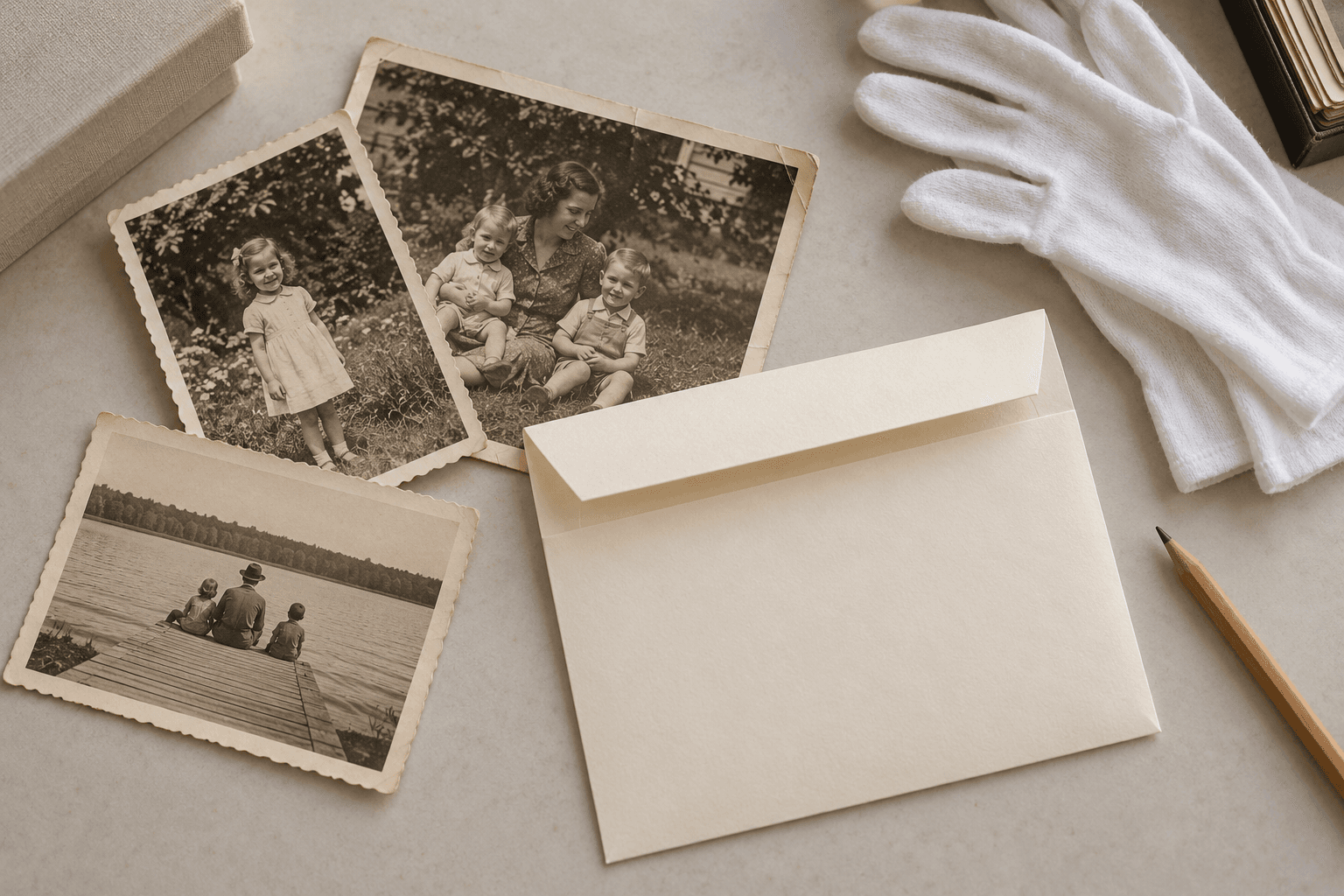
Inspect the storage surroundings
Check shelves, nearby food or water sources, and the condition of the cupboard or room. Look at outer housings before opening every object. Note observed debris or insect activity without deciding from a screen image which organism caused it. The National Archives links storage placement and reduced food and water access with lower pest risk. A cleaner digital scan does not address the conditions that may continue affecting originals.
Keep a measured response
Record the affected box and visible signs with a location and date. Avoid distributing its contents across a clean sorting table or merging them with another collection before advice is obtained. Do not treat old holes alone as proof of current activity. Seek appropriate building or conservation guidance for a suspected active problem, explaining the photographic materials and any brittle or lifting surfaces that could be harmed by handling.
Review prevention after the incident
Correct environmental and housekeeping issues through a suitable plan, retaining records of what was found and changed. Inspect replacement housings and the surrounding shelf over time. Keep a digital reference for browsing so physical retrieval remains controlled. If a damaged item is later copied and restored, save the condition capture and label reconstructed regions. Appearance repair and pest prevention are different outcomes and should be checked separately.
Before you finish
- Food and moisture risks are addressed.
- Suspected activity is documented before redistribution.
- No pest chemical is applied to the photographs.
Sources and further reading
- National Archives: Storing Family Papers and PhotographsChoosing appropriately sized housings and avoiding damaging storage materials and locations.
- Canadian Conservation Institute: Caring for Photographic MaterialsProcess-dependent vulnerabilities and preventive strategies for forces, water, pollutants, light, temperature, and humidity.
Questions about this restoration task
Do old insect holes mean insects are still active?
Not necessarily. Record the evidence and seek identification or monitoring advice rather than treating historical damage as a confirmed active infestation.
Continue with a related guide
Try a restoration on a copy of your photo
Keep the original scan. Upload a separate digital copy, review ImgHeal’s generated result, and decide whether it suits your needs.
Open ImgHeal