How to Monitor Humidity Where Family Photographs Are Stored
By ImgHeal · Updated
Monitor the actual storage location over time rather than relying on one room reading. Record humidity, temperature, placement, and visible damp risks, then interpret patterns against guidance for the materials present. A box offers some buffering but cannot correct a persistently unsuitable room; specialist film or color collections may need a more controlled storage plan.
Explore this topic: Review photo materials and defects
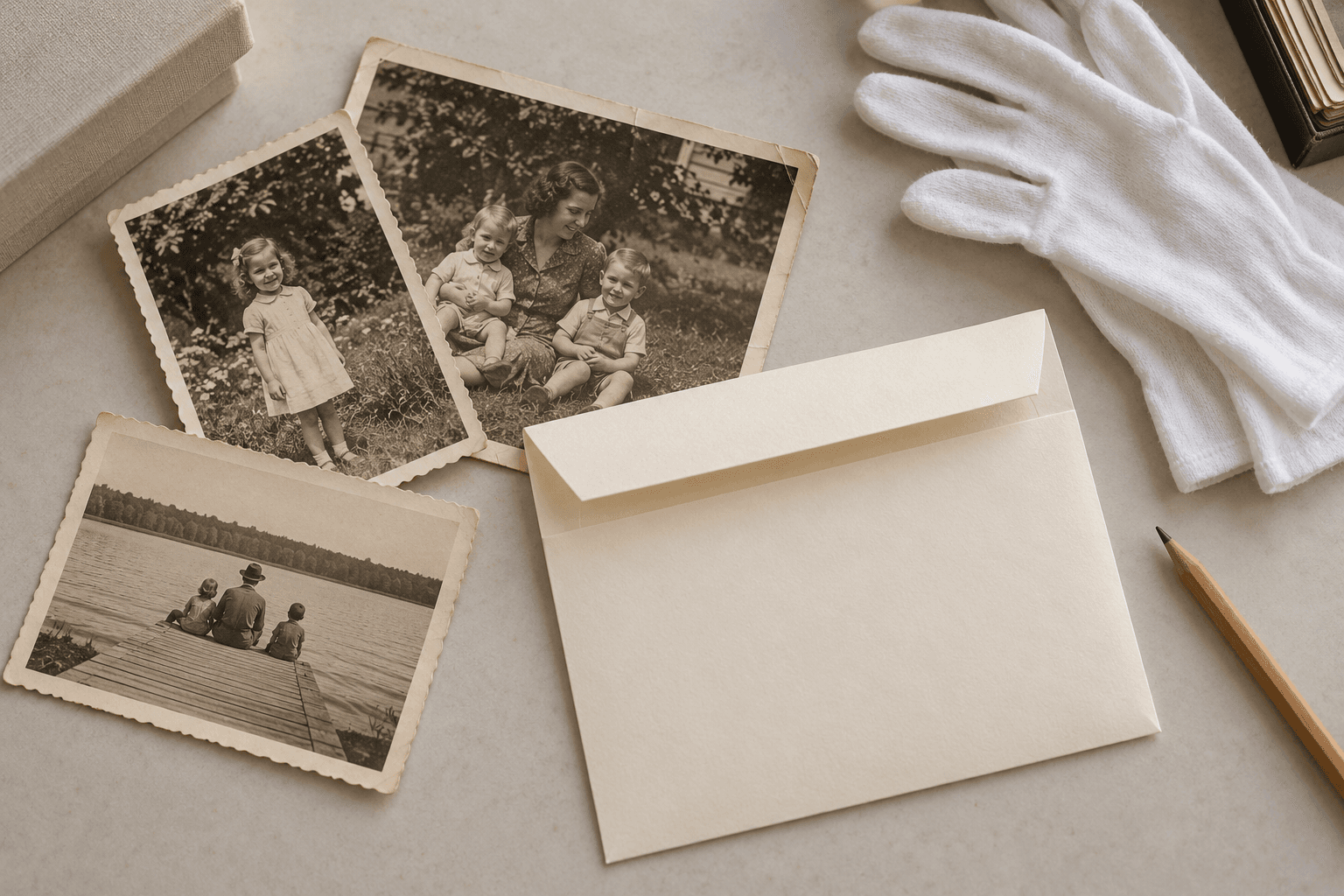
Measure where the boxes sit
Use a suitable instrument according to its instructions and place it where it represents the storage environment rather than directly beside a vent or window. Record the instrument and position so later readings can be compared meaningfully. Include typical weather and heating changes in the observation period. One favorable reading when the cupboard is open does not describe a closed shelf through a damp season or overnight temperature changes.
Look for patterns and causes
Compare readings with leaks, exterior walls, cold surfaces, and changes in room use. Keep visible observations separate from guesses about what a sensor reading has caused. The Canadian Conservation Institute emphasizes monitoring and interpreting environmental data. Different photographic materials have different vulnerabilities, so avoid turning a broad family-archive range into a guaranteed safe target for every negative, cased portrait, and color print in the same room.
Make controlled storage improvements
Address the source of dampness or relocate material to a suitable space before relying on small packets or sealed containers. Obtain advice for specialist storage or persistent problems. Record what changed and continue observations rather than declaring success after one lower reading. Keep accessible digital copies for viewing while the physical environment is improved; digital restoration cannot slow deterioration that continues in an unsuitable storage location.
Before you finish
- Readings represent the actual storage position.
- Patterns are recorded over time.
- Improvements address causes and are rechecked.
Sources and further reading
- Canadian Conservation Institute: Caring for Photographic MaterialsProcess-dependent vulnerabilities and preventive strategies for forces, water, pollutants, light, temperature, and humidity.
- Library of Congress: Care, Handling, and Storage of PhotographsPhotograph-specific guidance on enclosures, handling, storage orientation, and materials that can harm images.
Questions about this restoration task
Will silica gel make any closed photo box safe?
Do not assume that a small desiccant packet controls a box indefinitely. Enclosure design, the room, maintenance, and material needs matter; persistent dampness requires a suitable environmental plan.
Continue with a related guide
Try a restoration on a copy of your photo
Keep the original scan. Upload a separate digital copy, review ImgHeal’s generated result, and decide whether it suits your needs.
Open ImgHeal