Avoid Over-Identifying a Photo from an Unnamed Census Entry
By ImgHeal · Updated
An unnamed census entry cannot by itself identify a person in a photograph. Historical slave schedules require careful research into their purpose, categories, and surrounding evidence. Begin with documented family links and preserve uncertainty instead of treating an approximate age as a name.
Explore this topic: Research photo evidence
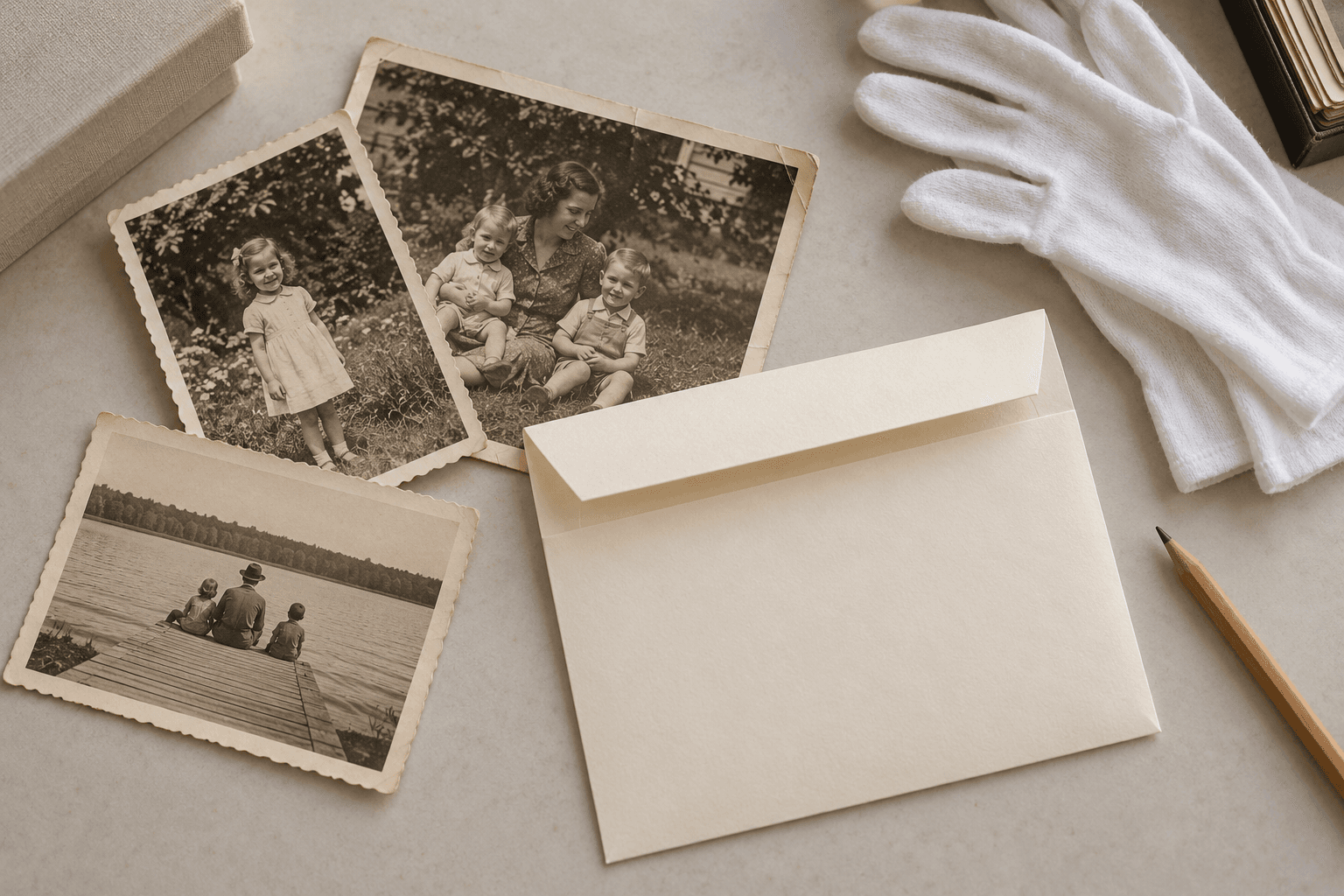
Read the actual schedule and its instructions
Confirm the census year, jurisdiction, and schedule type before interpreting an entry. NARA's census research guidance explains that historical enumeration practices differed across periods and populations. Preserve the headings and the full citation with your notes. A transcription may make an entry easier to find while concealing how little identifying information the original records. Do not turn a category used by an enumerator into a person's self-description or infer a connection from the appearance of a restored portrait.
Require a named evidence chain
Use independently documented relationships, locations, and relevant records to investigate whether an unnamed entry may relate to the family under study. Record each step and distinguish direct statements from hypotheses. Similar ages, localities, or household associations can generate candidates without settling identity. Keep competing explanations visible and document the scope of negative searches. When evidence is incomplete, seek specialist genealogical or archival guidance rather than choosing a name simply because it produces a coherent-looking family story.
Keep public captions proportionate to the evidence
A research note can explain that a possible connection is being investigated without assigning it to an unnamed sitter. Avoid publishing sensitive conclusions as facts when the chain is uncertain. Preserve the untouched photograph, the source's wording, and a separate explanation of its historical limitations. Any restored or colorized image remains a viewing interpretation. It cannot recover a documented identity from an unnamed administrative entry, establish ancestry from facial features, or resolve the missing links in the family's surviving records.
Keep the evidence trail usable
- Keep original schedule headings and terminology attributed.
- Build named links rather than matching approximate ages.
- Leave unsupported sitter identities open.
Sources and further reading
- National Archives: African Americans and the federal censusExplains historical census coverage and changing practices that affect identification research.
Questions about this restoration task
Can a matching age and county establish a sitter's identity?
No. Those details can suggest a candidate but do not supply a sufficient connection between an unnamed entry and a particular photograph.
Continue with a related guide
Try a restoration on a copy of your photo
Keep the original scan. Upload a separate digital copy, review ImgHeal’s generated result, and decide whether it suits your needs.
Open ImgHeal