Use Freedmen's Bureau Records to Research a Family Photo's Context
By ImgHeal · Updated
Freedmen's Bureau records may help investigate a family's documented relationships, work, or locality after the US Civil War. Start from supported names and places, not perceived identity in a photograph. The relevant office and record type are essential to a useful search.
Explore this topic: Research photo evidence
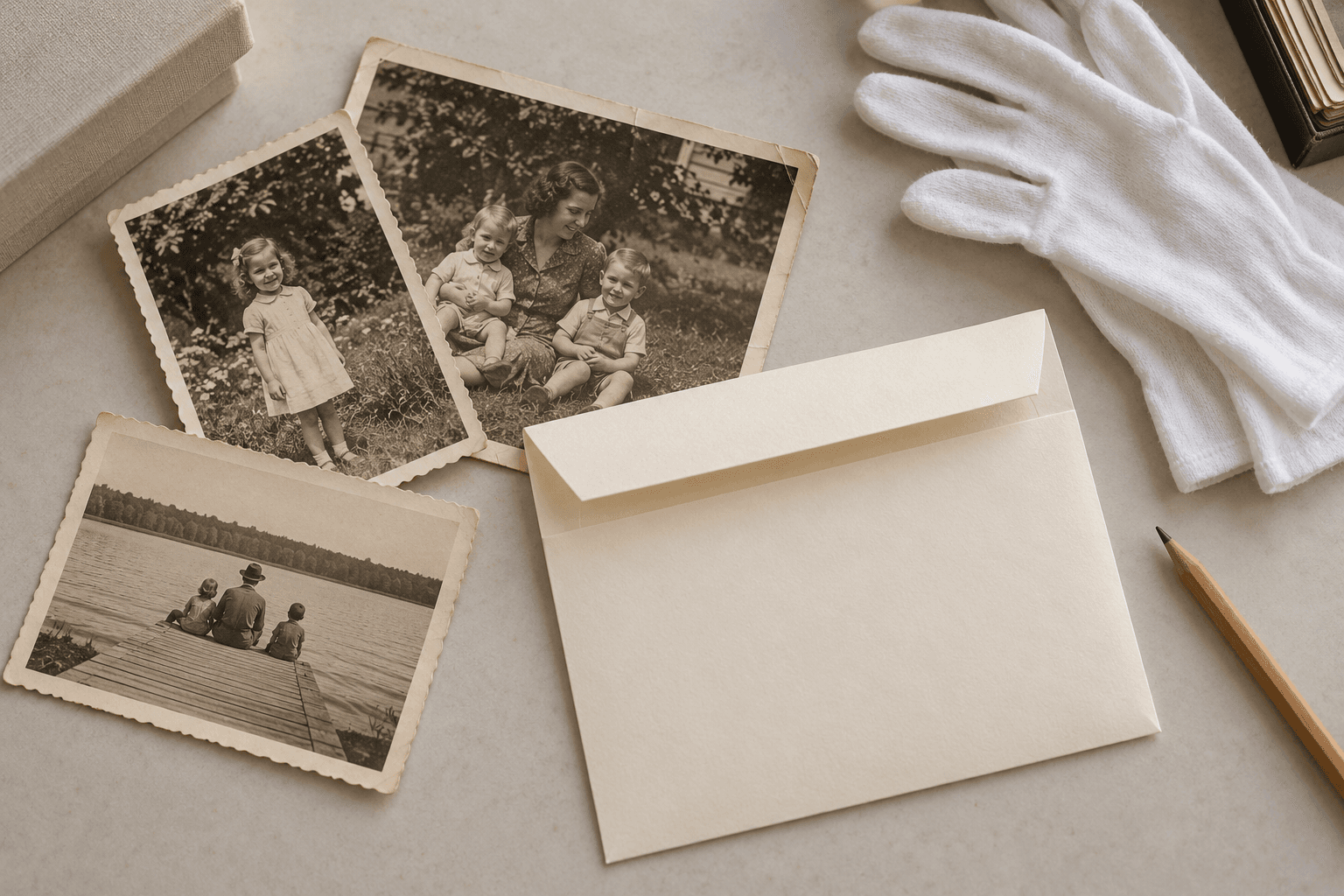
Choose a record question and jurisdiction
Write down the specific family relationship or locality you hope to test and the independent evidence connecting your research to that place. Consult NARA's guidance for the bureau's organization and surviving records. Different offices created different kinds of material, so a broad name search is not a complete examination of every relevant series. Record the office, date coverage, and source type. Do not infer that someone appears in these records from clothing, skin tone, or an inherited but unattributed photo label.
Read named relationships in their documentary context
When a record is found, retain the full page, headings, and reference. Compare names, places, and stated relationships with independently supported family information. An administrative description or historical term should be transcribed accurately but attributed to its source; it is not necessarily the person's own chosen description. Distinguish a direct statement from an inference you make across records. Keep alternative people separate when a common name or changing spelling leaves the connection unresolved.
Write a respectful, bounded photograph note
Use the record to describe the particular fact it supports, such as a documented relationship or presence in a locality. It does not automatically identify an unnamed sitter or establish the date of a portrait. Preserve uncertainty and consider how sensitive family information should be shared. Keep the untouched photograph and documentary citation available for later research. Restoration can provide a separate viewing version, but generated features should never be used to assign ancestry, status, or a life history that the evidence does not establish.
Keep the evidence trail usable
- Use supported names and a relevant office.
- Attribute historical terminology and relationship statements.
- Keep identity inferences separate from source facts.
Sources and further reading
- National Archives: African American reference reportsProvides research strategies for Freedmen's Bureau and related historical record groups.
Questions about this restoration task
Can appearance in an old photo establish a connection to bureau records?
No. Research should start from documented people, places, and relationships. Appearance is not a reliable basis for assigning ancestry or historical status.
Continue with a related guide
Try a restoration on a copy of your photo
Keep the original scan. Upload a separate digital copy, review ImgHeal’s generated result, and decide whether it suits your needs.
Open ImgHeal