What Can Negative Strip Order Tell You About a Family Event?
By ImgHeal · Updated
A continuous negative strip can preserve neighboring exposures, but a folder of scans may not preserve the same sequence. Record strips, frame marks, gaps, and sleeve positions before rearranging files. Use visible continuity and independent event records to test order, keeping uncertain connections separate from a confirmed chronology of when each scene happened.
Explore this topic: Research photo evidence
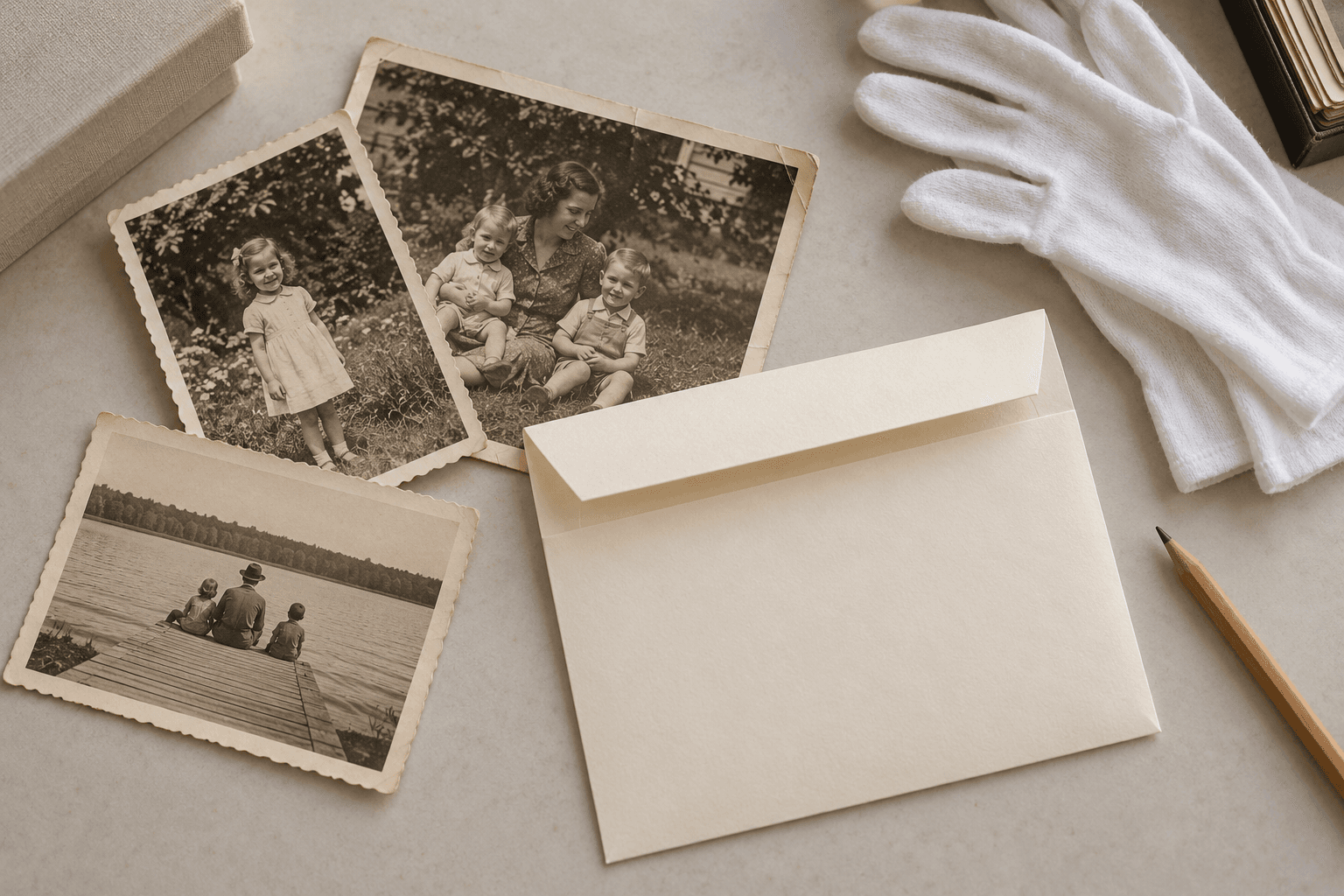
Record the physical relationships
Keep each strip's identifier and visible frame order in the digital records. Preserve safely obtained edge information and a complete reference view supplied by the scanning service. Do not remove fragile film from unsuitable housings just to inspect numbers. A sleeve position records the arrangement found, while a cut strip provides a different kind of relationship between adjacent frames. Record existing strip labels before reorganizing or renaming any delivered digital scans.
Compare sequence clues
Look for continuous gestures, changing camera position, lighting, and repeated people or surroundings. Check whether scanning software sorted files by name, date, or automatic frame detection. Gaps can reflect missing frames, blank exposures, or a delivery choice. A roll can contain several unrelated occasions, so nearby frames do not automatically share one day, place, or event.
Describe order at the supported level
Use wording such as neighboring frames or probable sequence when that is all the evidence establishes. Keep a scene chronology separate from the film arrangement, and cite any program, diary, or reliable event record used to connect them. Retain alternate frames when selecting a restoration source because they may explain a gesture or object without authenticating generated detail in the chosen exposure.
Before using this evidence
- Strips and scans have a correspondence record.
- Physical order and filename order are distinguished.
- A roll is not assumed to represent one event.
Sources and further reading
- National Archives: Archival description elementsDistinguishes production dates, numbering notes, creators, containers, access restrictions, and other descriptive fields.
- National Archives: Analyze a photographProvides an observation framework and asks which other evidence could answer questions raised by an image.
Questions about this restoration task
Do consecutive frame numbers prove the same day?
No. They can support an exposure sequence within a documented roll, but a camera can hold the same roll across several occasions. Use independent evidence for dates and event grouping.
Continue with a related guide
Try a restoration on a copy of your photo
Keep the original scan. Upload a separate digital copy, review ImgHeal’s generated result, and decide whether it suits your needs.
Open ImgHeal