How to Make an Emergency Priority List for Family Photographs
By ImgHeal · Updated
An emergency photo priority list identifies irreplaceable groups, their locations, existing copies, and the people qualified to advise on recovery. Prepare it in advance and keep a copy away from the collection. Human safety comes first: the list helps decisions after access is safe, not permission to enter a hazardous building or handle contaminated materials.
Explore this topic: Assess photo damage
Identify meaning and replaceability
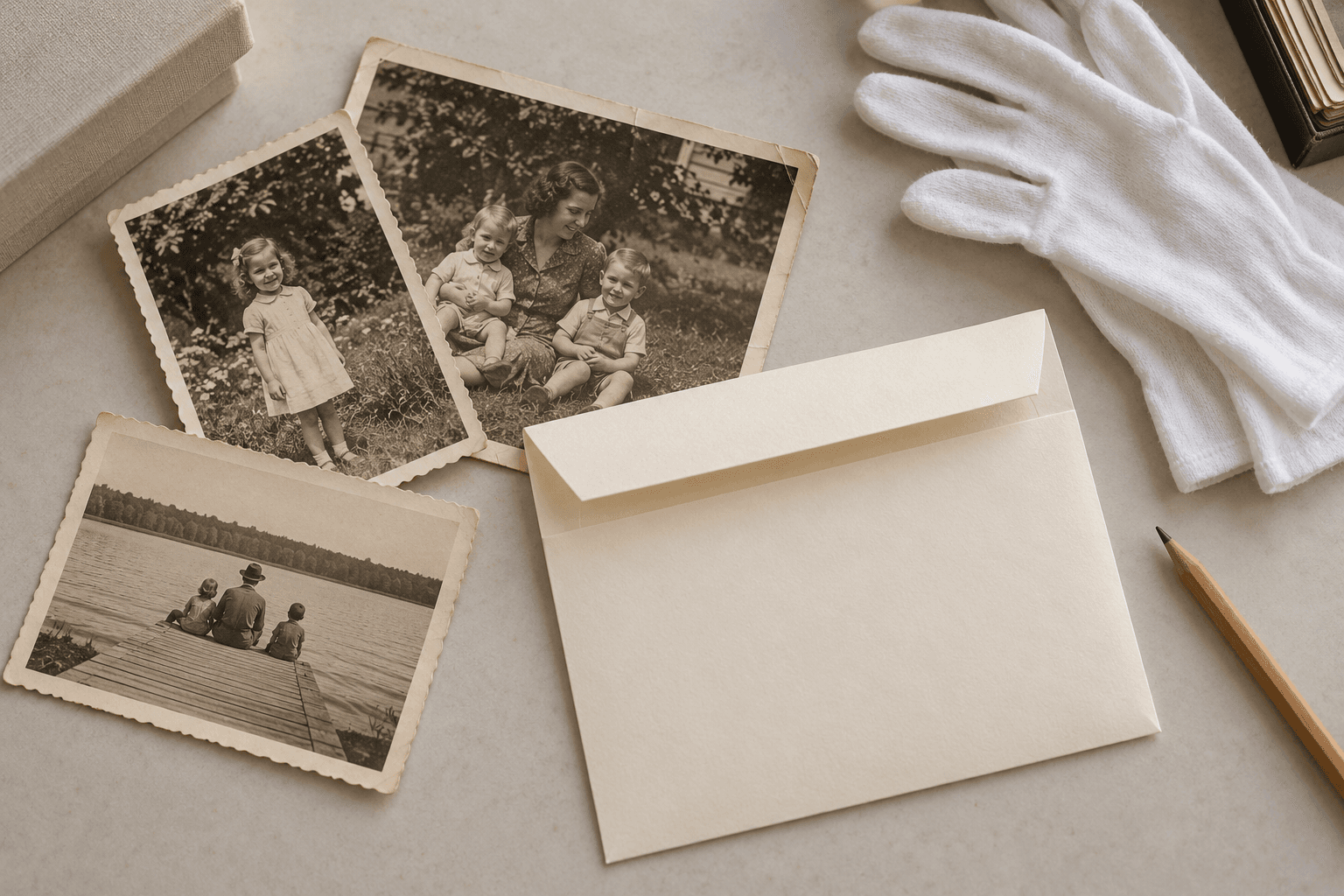
Choose a manageable set of groups whose loss would matter most and note why. Distinguish a unique portrait from an ordinary print with a verified digital source. Include unusual glass, cases, or film that could need process-specific handling. Do not rank solely by age or monetary value. A recent family image may be irreplaceable, while an antique reproduction may have another accessible source that reduces urgent handling needs.
Record locations and useful contacts
Use clear shelf, box, or album references that another authorized person can understand. Keep private access details secure rather than embedding them in a public photo inventory. Record relevant conservation or recovery contacts and where material-specific guidance can be found. List known hazards and fragile assemblies factually. The goal is to help a qualified responder understand what exists without requiring them to open every container during a stressful situation.
Test and maintain the plan
Ask someone to locate one group using the list under ordinary safe conditions, then revise confusing directions. Update locations after a move or scanning project. Keep digital copies and the priority list in separate locations where appropriate. Review whether the chosen source files can actually be opened. A practical prevention plan combines reduced physical risk with usable copies, while leaving treatment decisions to material-specific advice after an incident.
Before you finish
- Priorities distinguish unique and replaceable material.
- Locations and contacts can be understood by others.
- The plan never overrides human safety.
Sources and further reading
- National Park Service: Saving Wet PhotographsEmergency assessment and the need for conservator advice for valuable, older, stuck, or extensive wet photo collections.
- Canadian Conservation Institute: Caring for Photographic MaterialsProcess-dependent vulnerabilities and preventive strategies for forces, water, pollutants, light, temperature, and humidity.
Questions about this restoration task
Should I keep every important photo in one grab-and-go bag?
A single bag can concentrate risk and may not suit every object. Use appropriate housing, distributed copies, and a clear priority list rather than assuming one emergency container meets all preservation needs.
Continue with a related guide
Try a restoration on a copy of your photo
Keep the original scan. Upload a separate digital copy, review ImgHeal’s generated result, and decide whether it suits your needs.
Open ImgHeal