How to Digitize a Photograph with a Separate Tracing Overlay
By ImgHeal · Updated
Capture the photograph and tracing overlay as related components, preserving their alignment and written notes before making an image-only working copy. If a layer is adhered or fragile, leave it in place and obtain advice. An overlay may contain later interpretation rather than original scene information, so its markings should remain distinguishable from the photograph itself.
Explore this topic: Scan special originals
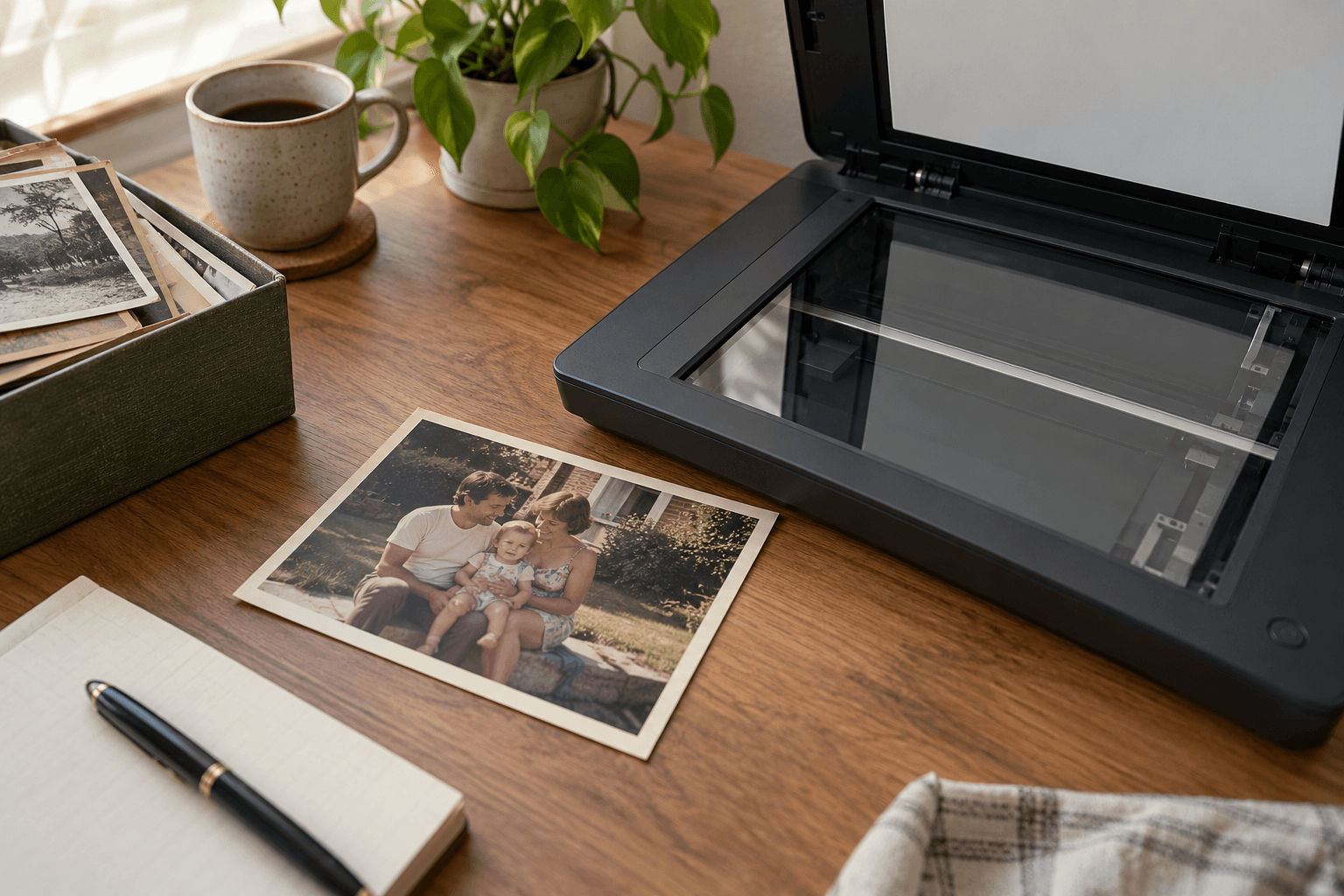
Record the assembled view
Photograph the whole arrangement and any fasteners, fold lines, labels, or alignment marks. Note whether the overlay is loose or attached without pulling to test it. Keep the source identifier visible in the documentation but outside original image surfaces. A tracing may explain a research project, retouching plan, or family annotation, yet its existence alone does not establish who made it or whether every identification written on it is correct.
Capture components only when safe
If the overlay moves freely and handling is appropriate, make separate views linked to the assembled record. Use support under delicate sheets and avoid new clips or adhesive markers. Do not erase or redraw faint overlay marks to make them easier to copy. If the layers cannot safely be separated, record the limitation and ask a conservator about access. A scanner lid should not be used to flatten a composite object into a more convenient stack.
Choose the correct restoration input
Use a photo-only capture when available and preserve the overlay as contextual evidence. If marks remain over the photograph, note which are later additions and inspect automated results for their reinterpretation as scene detail. Keep a literal transcription of supported overlay wording separate from any corrected caption. A restored image can help viewing while the component relationship and uncertainty remain available through the complete source records.
Before you finish
- The assembled relationship is recorded.
- Layers are separated only when safely free.
- Overlay marks are distinguished from scene evidence.
Sources and further reading
- National Archives: Tips for Handling Family Papers and PhotographsPlanning careful handling of family originals rather than changing or repairing their physical surfaces.
- National Archives: Digitizing Family Papers and PhotographsSupporting originals during copying and retaining the physical materials after digitization.
Questions about this restoration task
Can I erase pencil from the tracing before copying it?
Do not alter the original annotation for capture convenience. Make a complete source record and adjust a separate viewing copy if a cleaner presentation is useful.
Continue with a related guide
Try a restoration on a copy of your photo
Keep the original scan. Upload a separate digital copy, review ImgHeal’s generated result, and decide whether it suits your needs.
Open ImgHeal