When Should You Display a Copy Instead of an Original Photograph?
By ImgHeal · Updated
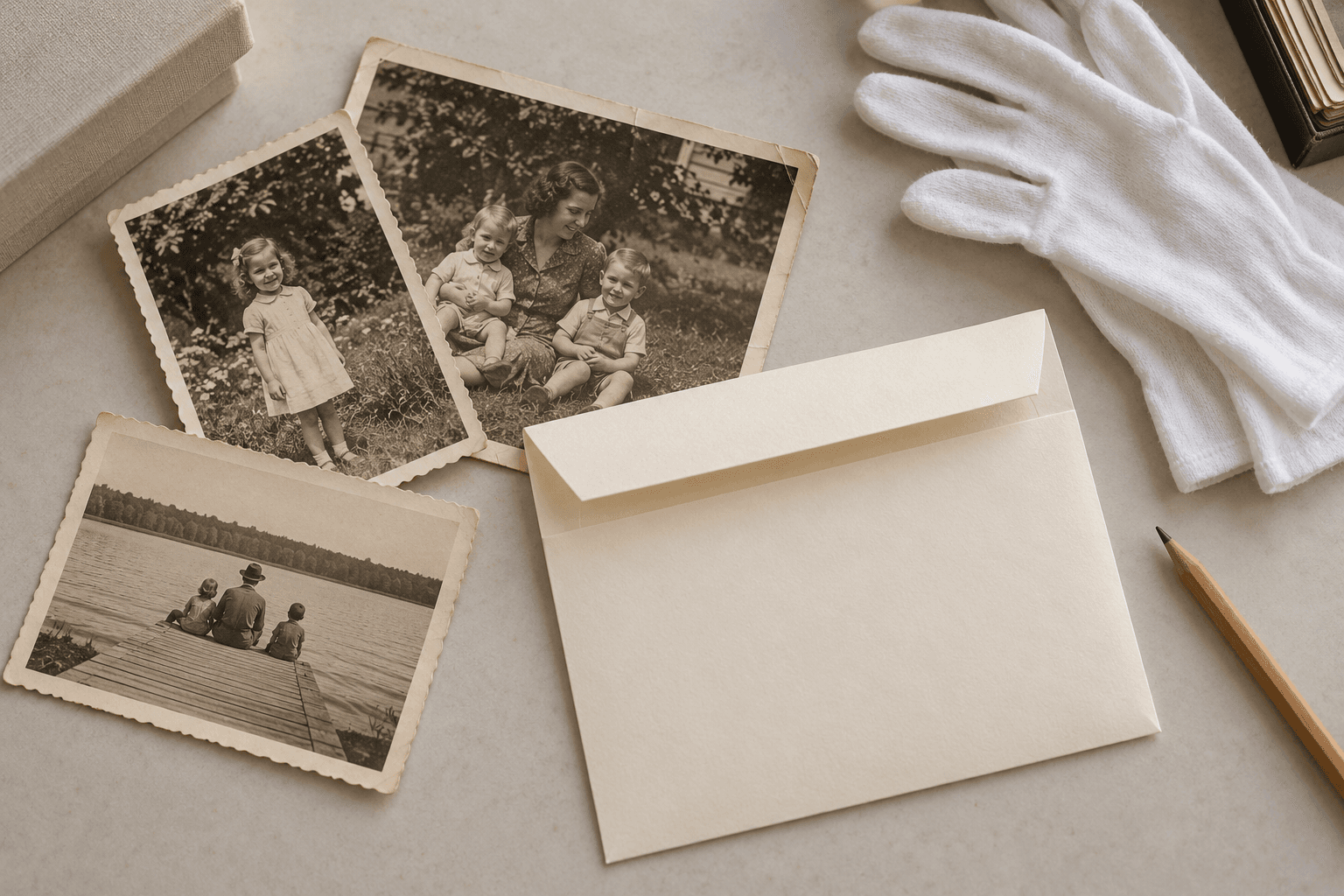
Use a well-labeled display copy when frequent viewing, bright conditions, or an object's fragility makes routine display of the original undesirable. Keep the original suitably housed and retain a complete source capture. A restored or colorized copy can serve family enjoyment, provided its alterations are identified and it is not presented as an untouched historical object.
Explore this topic: Print and display photos
Define what viewers need
Decide whether the purpose is enjoying a face, seeing an inscription, or exhibiting the physical artifact itself. A replacement print can often meet the first purpose while avoiding repeated exposure or handling of an irreplaceable object. If the mount or original process matters, plan an appropriately supported exhibit with professional guidance. Do not assume the original must hang permanently on a wall simply because it was inherited in a frame.
Prepare an honest display derivative
Retain a complete unaltered capture and create the display file separately. Record cropping, tone corrections, colorization, and reconstruction in a short note. Choose a print size supported by actual detail rather than an impressive pixel count alone. Check faces, writing, and borders against the source. A copy may deliberately prioritize readability, but that presentation goal should not become a claim that every newly sharp feature was recovered authentically.
Keep the original accessible through records
Label the display or accompanying caption with its source reference and interpretive status where appropriate. Record the original's housing and location privately, keeping routine viewers on the access copy. Review a proof in the intended setting and replace a damaged display print from the retained export rather than rescanning the original unnecessarily. This approach keeps family access useful while the object's physical care follows a separate preservation plan.
Before you finish
- The display purpose does not require the artifact.
- The copy's edits are documented.
- The original has a suitable recorded location.
Sources and further reading
- National Archives: Displaying Family Papers and PhotographsUsing copies for display and considering the materials, light, and environment around originals.
- Library of Congress: Care, Handling, and Storage of PhotographsPhotograph-specific guidance on enclosures, handling, storage orientation, and materials that can harm images.
Questions about this restoration task
Should a display copy be labeled even if it looks like the original?
Yes, where identification could be confusing. A short caption can distinguish a reproduction or restored interpretation while preserving the source reference.
Continue with a related guide
Try a restoration on a copy of your photo
Keep the original scan. Upload a separate digital copy, review ImgHeal’s generated result, and decide whether it suits your needs.
Open ImgHeal