How to Take Down a Family Photo Display Without Losing Its Records
By ImgHeal · Updated
Prepare a clear receiving area and inventory before removing a photo display. Identify originals, reproductions, borrowed frames, captions, and source references separately, then follow an appropriate handling route for each. Record condition and return location rather than stacking everything together. Taking down a display is part of preservation and custody, not merely clearing the wall.
Explore this topic: Print and display photos
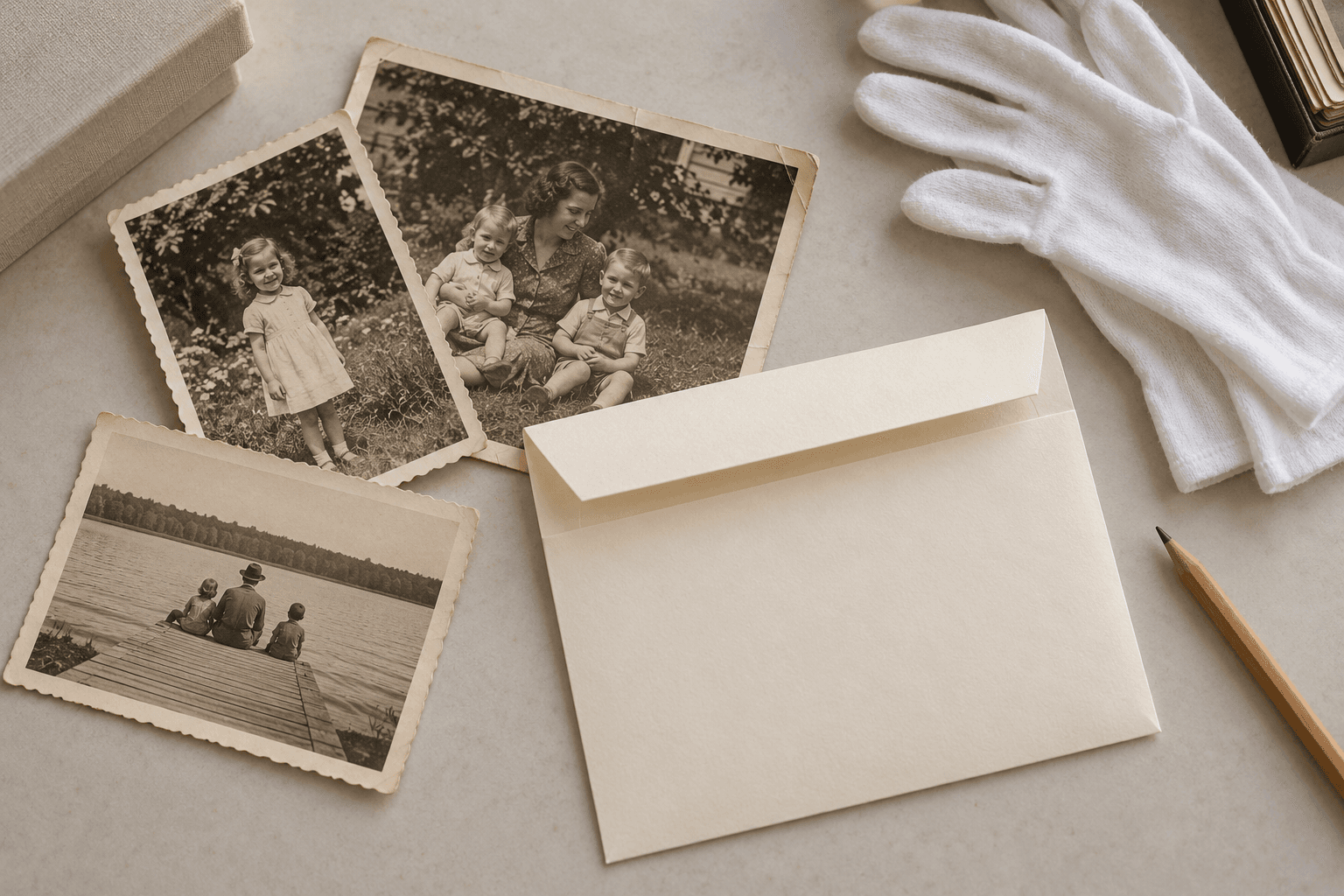
Prepare the removal sequence
Check the installation list and identify heavy, fragile, or borrowed assemblies before starting. Clear a supported table and plan suitable housings and transport routes. Use enough people and appropriate equipment for the actual frame size; do not detach a vulnerable original from its mount just to reduce the load. If a frame or image assembly has become unstable, ask an experienced framer or conservator for advice before moving its internal components.
Match objects and captions
Keep each label with its display identifier and note whether it describes an original or an interpreted copy. Compare safe condition references and record observable concerns without attempting a hurried repair. Retain the final exhibit order and any corrected captions as a release record. A display may have generated new family identifications, but those comments still need evidence review before they overwrite the archive's source description or become permanent labels on original housings.
Confirm return and digital continuity
Record who receives each object and where it will be stored, checking borrowed material against the intake agreement. Keep installation and removal dates for originals whose exposure was being monitored. Save display exports and proofs separately from retained source captures. Give relatives usable viewing copies so the end of an exhibit does not lead to unnecessary repeated handling. A completed takedown leaves the physical collection accounted for and the display's information understandable after its temporary arrangement is gone.
Before you finish
- Removal has suitable support and responsibilities.
- Labels stay linked to object identifiers.
- Returns and storage locations are confirmed.
Sources and further reading
- National Archives: Tips for Handling Family Papers and PhotographsPlanning careful handling of family originals rather than changing or repairing their physical surfaces.
- Library of Congress: Preservation Guidelines for Matting and FramingPreservation framing, suitable display conditions, and the use of reproductions instead of long-term original display.
Questions about this restoration task
Can original and reproduction prints be stored together after the event?
Keep their roles clearly identifiable and use suitable housing for each. Do not mix damp, dirty, or temporary display materials into the original collection without assessment.
Continue with a related guide
Try a restoration on a copy of your photo
Keep the original scan. Upload a separate digital copy, review ImgHeal’s generated result, and decide whether it suits your needs.
Open ImgHeal