How to Review a Map Visible in an Old Family Photo
By ImgHeal · Updated
Keep a photographed map's structure and uncertain text intact rather than using generated labels to identify places or reconstruct a family journey.
Explore this topic: Restore detailed scenes
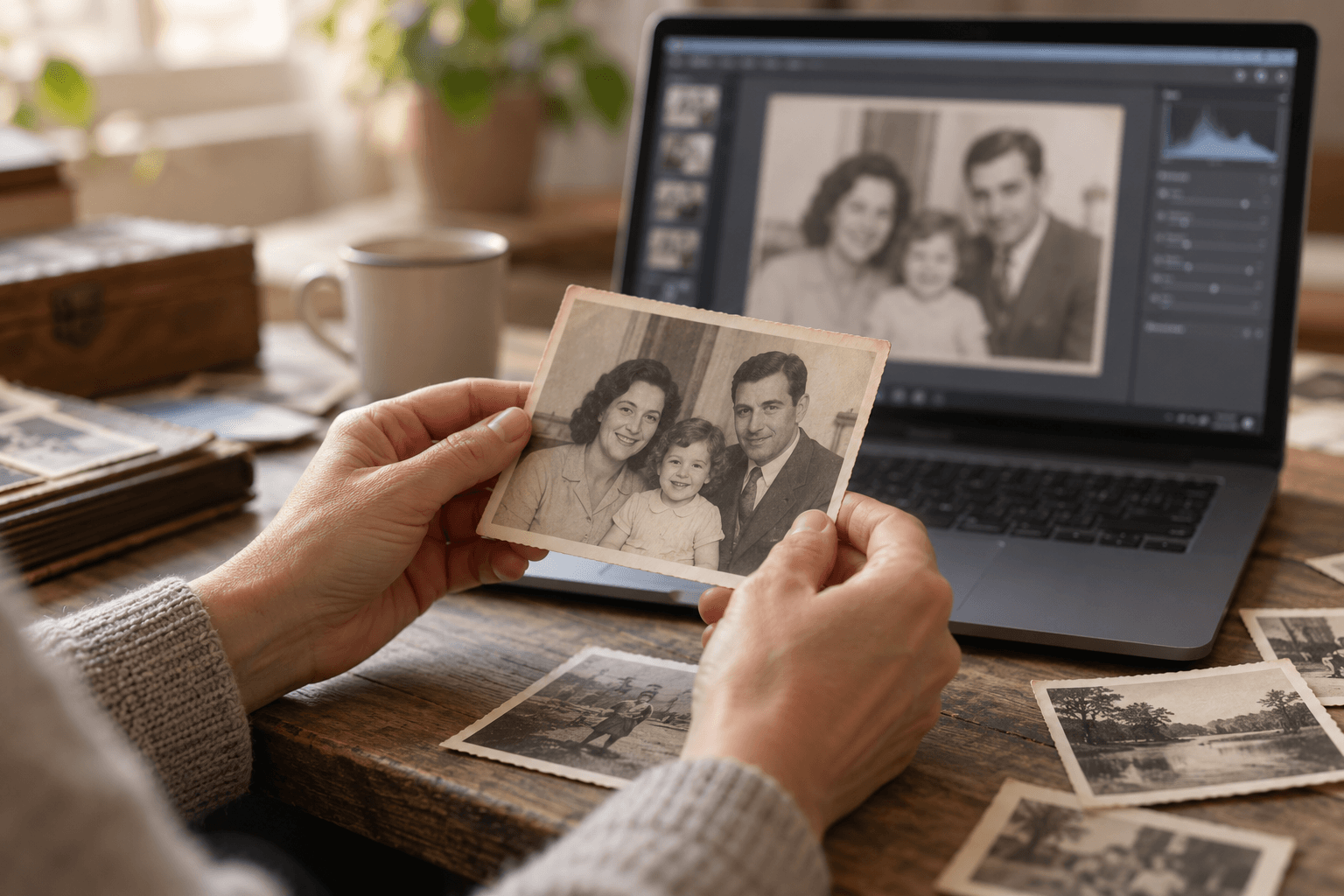
Record the original readable content
Capture a source crop that includes the map boundary and any clear place names. Distinguish a wall map, folded sheet, and decorative background. Perspective and low resolution can limit what can be read. Do not assume every line is a road or every dark patch a label without supporting context.
Compare geometry and text
Look for coastlines, routes, and labels changed by restoration. A generated map may remain visually map-like while becoming geographically meaningless. Check folds and hands overlapping the sheet. Preserve the original arrangement and avoid using newly crisp words as confirmation of the country, destination, or journey represented in the photograph.
Research the object separately
If the map matters, compare known editions or another photograph using source-supported features. Record references and uncertainty in the caption notes. Retain the full scene and a restrained restored version. A separate illustrative map can explain a documented journey, but should be labeled as an added aid rather than a recovery of unreadable photographic detail.
Check before finishing
- Readable source text is recorded cautiously.
- Map structure was checked for changes.
- Journey claims use independent evidence.
Continue with a related guide
Try a restoration on a copy of your photo
Keep the original scan. Upload a separate digital copy, review ImgHeal’s generated result, and decide whether it suits your needs.
Open ImgHeal