How to Use Reverse Image Search to Investigate a Family Photo's Source
By ImgHeal · Updated
Reverse image search can locate related online copies, but it cannot establish a photograph's true first publication or identity by itself. Compare actual images, inspect the pages behind the matches, and record the source chain. TinEye specifically distinguishes its crawl dates from publication dates. A missing result also reflects search coverage, not proof that the photograph has never been shared.
Explore this topic: Research photo evidence
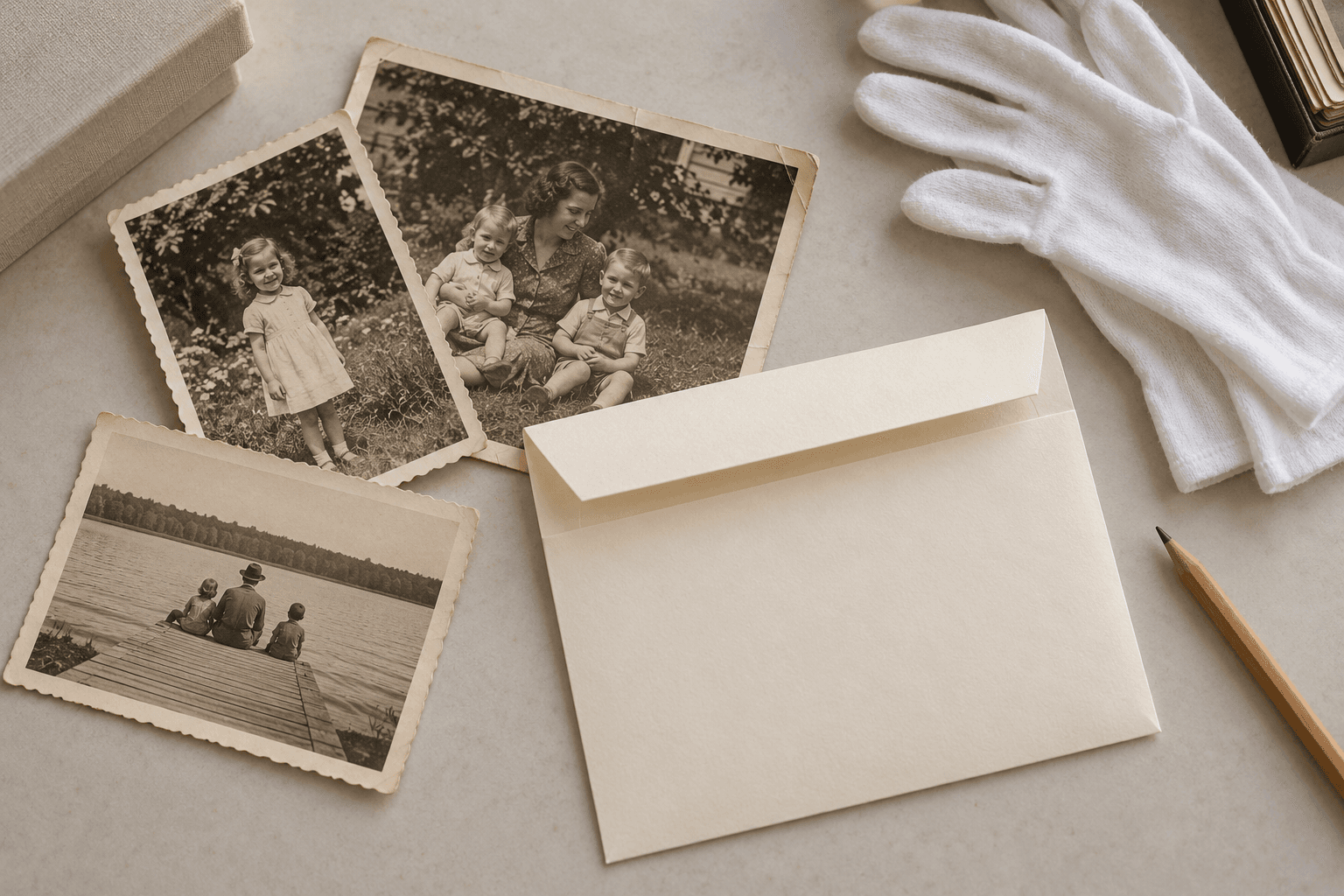
Choose an appropriate search copy
Use an authorized image and consider privacy before uploading a family photograph to another service. Keep the original untouched and record which crop or version was searched. Try the complete image first, then a useful crop when the task warrants it. Restoration, borders, text overlays, and heavy cropping can change matching behavior, so a failed search from one derivative does not settle whether earlier copies exist online.
Inspect matches rather than thumbnails
Open candidate source pages and compare gestures, object placement, borders, scratches, and crops to distinguish the same exposure from a similar scene. Record who published the image, their stated source, and the date information actually supplied. Several reposts with the same caption may all copy one unsupported claim. Preserve contradictions and avoid accepting a confident description solely because it appears repeatedly in search results.
Build a qualified provenance lead
Follow references to a repository, photographer, publication, or contributor that can supply better evidence. Keep search date, service, candidate links, and what each match demonstrates. Do not label a crawl date as the exposure or original online publication date. Use the findings to request or compare a source, then retain its independent provenance. A restored viewing version should remain a derivative, not become the evidence that authenticates its own online caption.
Before using this evidence
- The search respects access and privacy.
- Matches are checked on actual source pages.
- Crawl, publication, and exposure dates stay distinct.
Sources and further reading
- TinEye: Sorting image resultsExplains that earliest crawl dates are not original publication dates.
- National Archives: Analyze a photographProvides an observation framework and asks which other evidence could answer questions raised by an image.
Questions about this restoration task
Does the oldest reverse-search result prove the original source?
No. It may show the earliest copy found by that service, and TinEye's date can be a crawl date. Follow documented credits and records before making a first-publication claim.
Continue with a related guide
Try a restoration on a copy of your photo
Keep the original scan. Upload a separate digital copy, review ImgHeal’s generated result, and decide whether it suits your needs.
Open ImgHeal