How to Prioritize Restorations for an Upcoming Family Event
By ImgHeal · Updated
Choose a realistic photo set for a reunion or display while allowing time for source checks, likeness review, and verified files or prints.
Explore this topic: Plan a restoration project
Choose the essential photographs
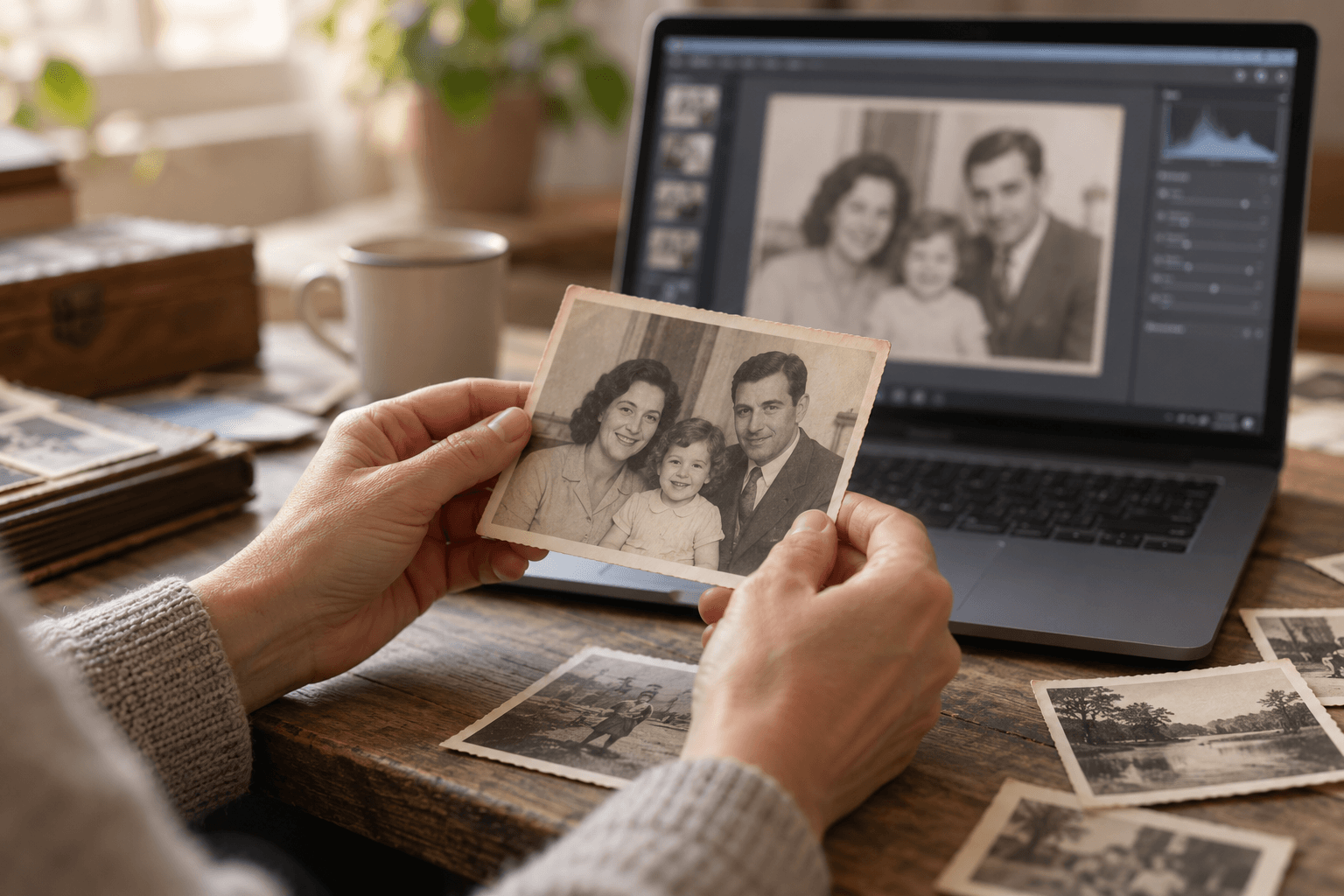
Identify the images that matter most and locate their best available sources. Separate essential portraits from optional additions. Check whether permission, identity, or physical handling questions could delay an item. A long wish list should not stop the most meaningful photographs receiving careful review. Keep unresolved items visible instead of quietly filling gaps with unverified generated content.
Plan backward from delivery
Allow time for proofing, transfer, printing, and corrections using the provider's current requirements. Choose a point when the event set stops accepting new images. Put late discoveries in a separate queue. An unfinished addition should not silently replace an already reviewed file, and a changed caption should still receive a source check even near the deadline.
Preserve completion standards
Use a restrained original-based version when an ambitious reconstruction cannot be reviewed in time. Label color interpretations and record limitations. Inspect the actual handoff files or prints before the event. A smaller useful set with supported identifications serves the family better than a larger folder whose likeness, captions, and output quality have not been checked.
Check before finishing
- Essential images are selected early.
- Proof and correction time is planned.
- Every delivered image meets the agreed review checks.
Continue with a related guide
Try a restoration on a copy of your photo
Keep the original scan. Upload a separate digital copy, review ImgHeal’s generated result, and decide whether it suits your needs.
Open ImgHeal