Check Whether a Family Portrait Photo Is a Photograph of a Painting
By ImgHeal · Updated
A family portrait print may reproduce a painting or drawing rather than a camera sitting. Establish what the photograph records before researching the sitter's age or the studio occasion. A photographic reproduction can have a different creator and date from the artwork it depicts.
Explore this topic: Research photo evidence
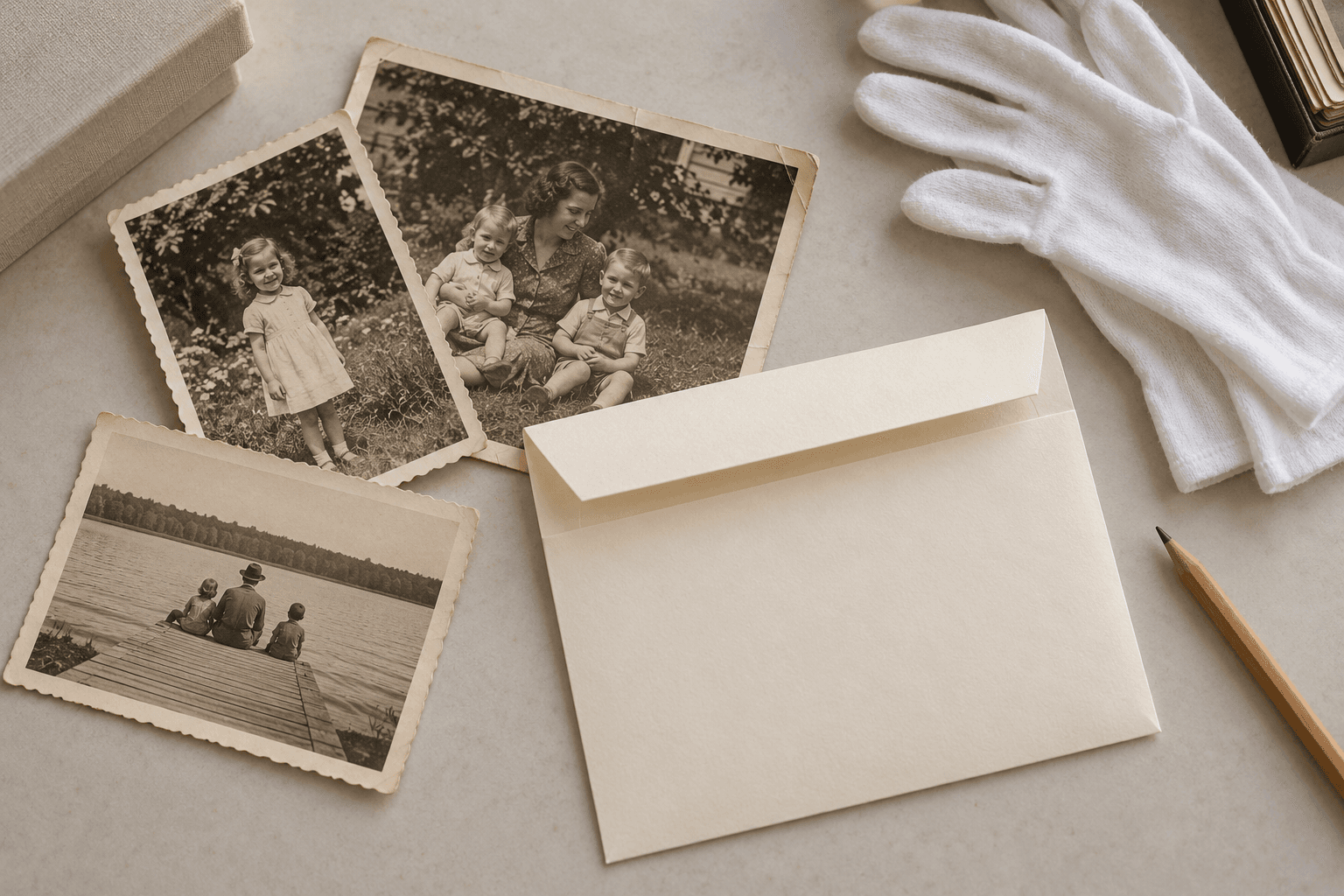
Inspect the whole reproduction
Retain borders, frame edges, inscriptions, publisher marks, and visible surface texture in the source scan. Look for clues without treating one soft brush-like area as proof of a painting. Retouching, print processes, and damage can produce misleading appearances. Record the family's description and any studio or publisher wording separately. A cropped face may conceal the evidence that the source was an artwork, so request the full print or album page before drawing a conclusion from a small digital copy.
Compare a candidate artwork record
If a museum, collection, or catalog offers a possible match, compare pose, clothing, background, dimensions or proportions, and distinctive details. Keep the artwork identifier and the photographic reproduction identifier separate. Getty's documentation framework distinguishes an object from related visual documentation. A named sitter in a painting record does not automatically identify every similar photographic print. Check the attribution and uncertainty of the artwork record itself, and record whether the reproduction was cropped, mirrored, or otherwise altered.
Keep the two histories visible
State the supported relationship between artwork and photograph, including separate creator roles and dates where known. The sitter's life date, painting date, reproduction date, and current scan date are different events. Do not use photographic clothing-dating assumptions as though the print necessarily records a live sitting. Preserve the untouched reproduction and its object reference beside any restored viewing copy. Generated photographic-looking skin or texture can obscure the source medium, so label the derivative clearly if an edit makes a painted portrait appear like a camera photograph.
Keep the evidence trail usable
- Keep full borders and publisher information.
- Identify artwork and reproduction separately.
- Preserve separate creator roles and date timelines.
Sources and further reading
- Getty: Object and visual-documentation categoriesDistinguishes works, related objects, creator roles, and visual reproductions.
Questions about this restoration task
Does a photographic print always show a person posed for that camera?
No. It can reproduce a painting, drawing, earlier photograph, or another object. Establish the source medium before making that claim.
Continue with a related guide
Try a restoration on a copy of your photo
Keep the original scan. Upload a separate digital copy, review ImgHeal’s generated result, and decide whether it suits your needs.
Open ImgHeal