Paper or Plastic: Which Enclosure Should Hold an Old Photo?
By ImgHeal · Updated
Choose paper or plastic around the photograph's material, condition, and expected use. Transparent sleeves allow viewing without removal, while paper can reduce light exposure and is easier to label. Neither option is universally safe: damaged surfaces, unstable negatives, enclosure quality, and uncontrolled humidity can change the appropriate choice for a particular object.
Explore this topic: Review photo materials and defects
Define how the object will be used
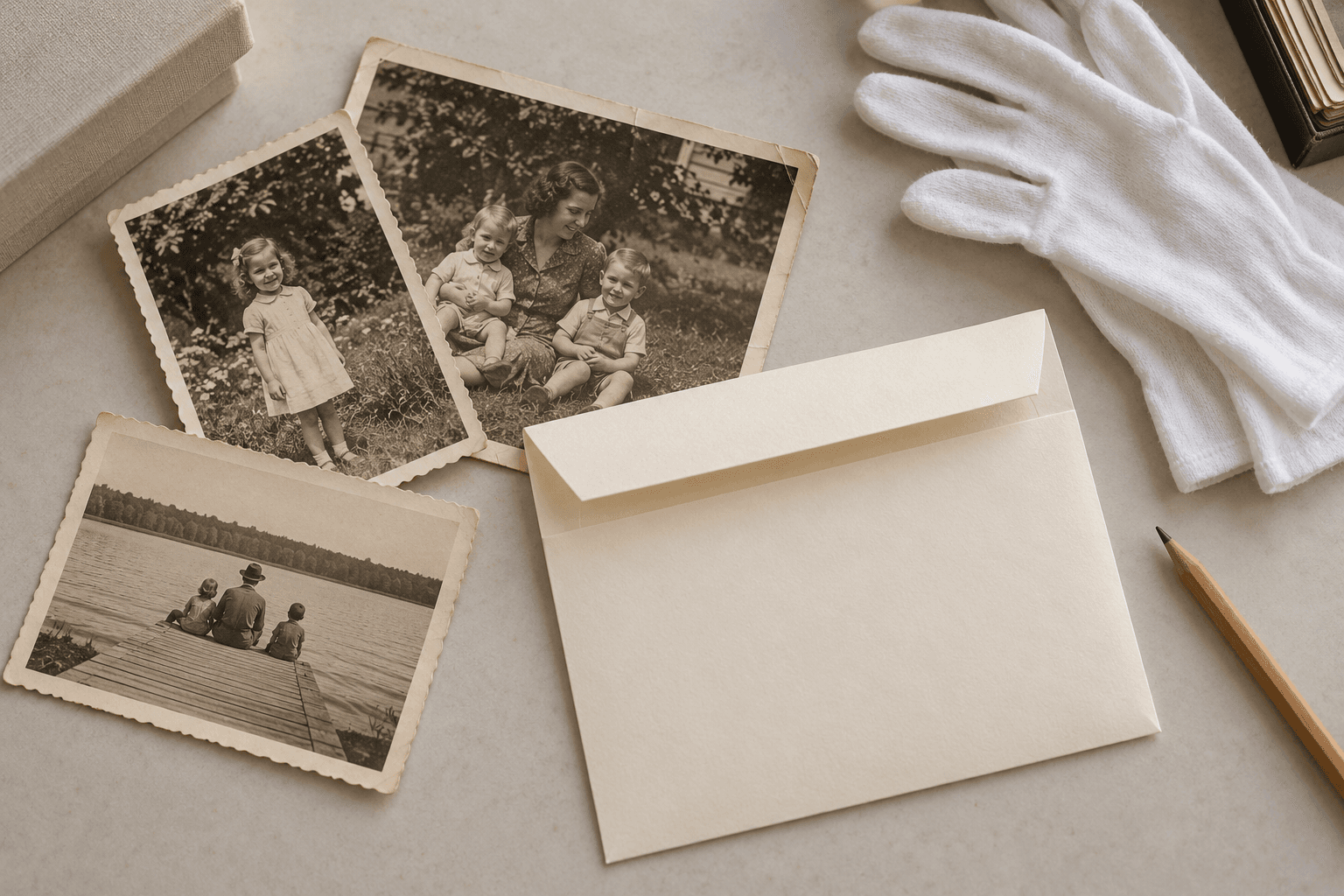
Decide whether the print needs frequent viewing, occasional reference, or mainly protected storage. A sleeve may reduce direct handling for a stable print, but a paper folder can make a fragile mount easier to support. Consider the whole access route: a person should not need to bend a photograph or pinch its image area every time they retrieve it from whichever enclosure you select.
Check material and surface compatibility
Read photograph-specific supplier documentation instead of judging plastic by its clarity or paper by its color. The Library of Congress identifies suitable enclosure materials and important exceptions. If the print is tacky, flaking, hand-colored with loose media, or difficult to remove from its existing housing, stop before sliding it into another close-fitting enclosure. Get advice that addresses the actual process and condition rather than copying a rule for all prints.
Trial one appropriate item
Choose a stable representative print and check fit without pressure, keeping an untouched intake record. Label the housing before inserting the original where practical. Record where the previous envelope or identifying note has been retained. Review whether a person can retrieve the enclosed object with full support. Only expand to the rest of the batch when the material, handling route, and storage location have all been considered together.
Before you finish
- The access purpose is clear.
- Surface condition was considered.
- A supported retrieval test succeeded.
Sources and further reading
- Library of Congress: Care, Handling, and Storage of PhotographsPhotograph-specific guidance on enclosures, handling, storage orientation, and materials that can harm images.
- National Archives: Storing Family Papers and PhotographsChoosing appropriately sized housings and avoiding damaging storage materials and locations.
Questions about this restoration task
Is clear plastic always better because I can see the photo?
No. Visibility is useful, but certain surfaces and film materials need other arrangements. A suitable enclosure should reduce handling without introducing contact, humidity, or support problems.
Continue with a related guide
Try a restoration on a copy of your photo
Keep the original scan. Upload a separate digital copy, review ImgHeal’s generated result, and decide whether it suits your needs.
Open ImgHeal