How to Review Food Colors in a Colorized Family Table Photo
By ImgHeal · Updated
Keep a colorized meal scene readable without treating generated colors as evidence of recipes, ingredients, or family customs.
Explore this topic: Colorize with context
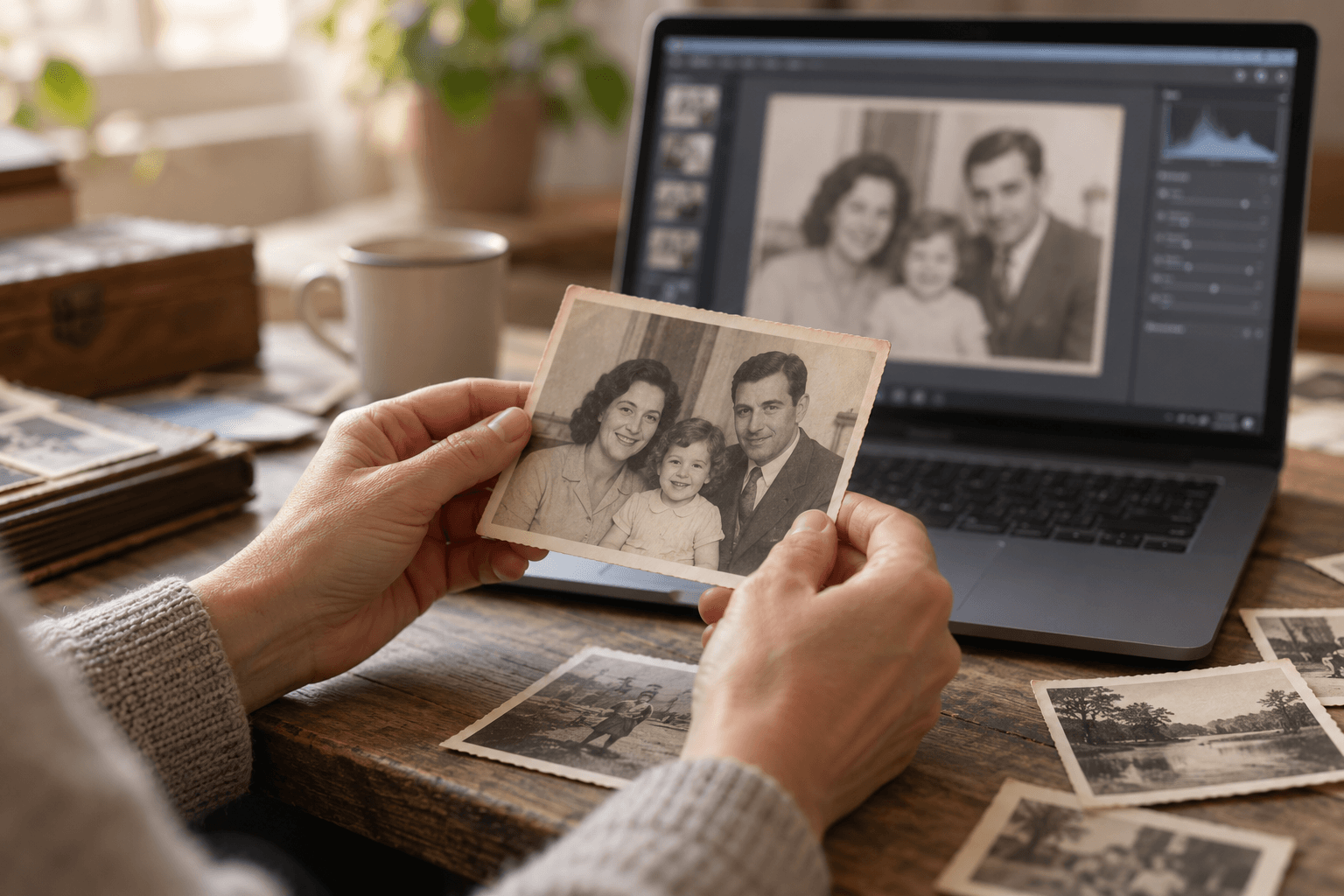
Identify only supported objects
Compare dish shapes, containers, and any written description of the occasion. Several foods can share the same monochrome tone and texture. Record family recollections as recollections rather than deriving an ingredient from an automated hue. A convincing red sauce or golden crust is not proof of what was served.
Check small color boundaries
Inspect plates, hands, glassware, and patterned tablecloths for spill. Colorization may turn reflections into food or blend cutlery into nearby dishes. Preserve the original arrangement and tonal detail. If a specific dish is independently identified, a reference can guide an interpretation without authenticating every small element of the image.
Describe the finished version carefully
Label the colorized image and retain the source with any recipe or event notes. Compare the full table at normal display size before sharpening small objects. A family caption can name a meal when supported by testimony, but should not cite newly generated colors as confirmation. Keep the distinction visible in the accompanying description.
Check before finishing
- Food identifications have independent support.
- Small objects retain clear boundaries.
- The caption distinguishes recollection from generated color.
Continue with a related guide
Try a restoration on a copy of your photo
Keep the original scan. Upload a separate digital copy, review ImgHeal’s generated result, and decide whether it suits your needs.
Open ImgHeal