How to Store a Photograph Too Large for a Standard Photo Box
By ImgHeal · Updated
An oversized photograph needs support that accommodates its complete dimensions without folding, overhang, or pressure. Measure the object in its resting state and choose a suitable flat housing where possible. Do not roll a brittle print, flatten a curled one, or trim a mount to make it fit storage designed for smaller photographs.
Explore this topic: Review photo materials and defects
Measure without reshaping the object
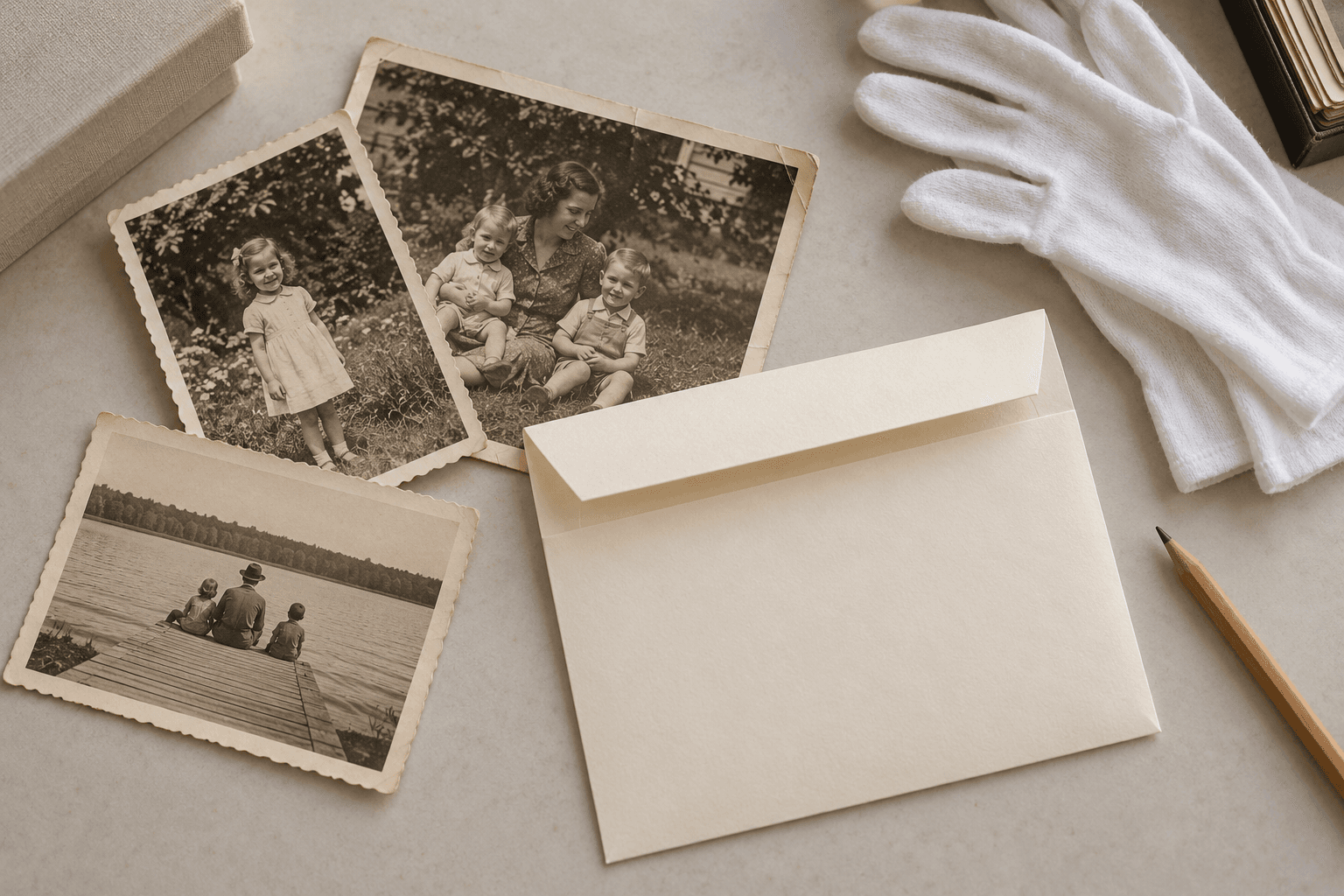
Record maximum dimensions including the mount, projecting corners, and any attached borders. Observe folds, tears, and natural curvature without pressing them flat. Make a paper template for comparing box sizes so the original does not repeatedly travel to the supplies. Note how many people or supports are needed to lift it safely. A large photograph can suffer damage simply from flexing while being moved between unsuitable surfaces.
Plan the support and storage location
The Library of Congress prefers horizontal storage for oversized photographs and prints on brittle mounts. Choose a photo-safe enclosure that supports the full object and does not require tightly packed stacking. Check shelf dimensions and the route to the shelf before ordering. A large flat box is not helpful if it must hang over a narrow shelf or be tipped on edge whenever someone opens the cupboard.
Make access possible without flexing
Label the outer housing and keep a digital reference image so casual identification does not require repeated opening. Plan a cleared table large enough for retrieval. Keep vulnerable parts supported throughout any move and seek specialist help if the photograph cannot rest safely without treatment. A complete digital capture can serve everyday viewing while the oversized original stays in its stable housing, preserving both the image and the physical evidence at its edges.
Before you finish
- The entire object fits its support.
- Shelf and access route are suitable.
- No fold, curl, or mount was forced.
Sources and further reading
- Library of Congress: Care, Handling, and Storage of PhotographsPhotograph-specific guidance on enclosures, handling, storage orientation, and materials that can harm images.
- National Archives: Storing Family Papers and PhotographsChoosing appropriately sized housings and avoiding damaging storage materials and locations.
Questions about this restoration task
Should I trim a damaged mount so a photo fits?
No. A mount can support the image and contain useful evidence. Choose housing around the object's existing size and obtain advice for damaged or unstable supports.
Continue with a related guide
Try a restoration on a copy of your photo
Keep the original scan. Upload a separate digital copy, review ImgHeal’s generated result, and decide whether it suits your needs.
Open ImgHeal