How to Research the Ceremony Shown in an Old Family Photo
By ImgHeal · Updated
A photograph can record ceremonial clothing, objects, and arrangements without conclusively identifying the ceremony or every participant's role. Start with a literal scene description and any contemporary caption, then seek relevant community or venue records and informed testimony. Keep interpretations qualified. Clothing similarity and a familiar building interior do not by themselves establish a person's beliefs or relationships.
Explore this topic: Research family photos
Describe the visible scene respectfully
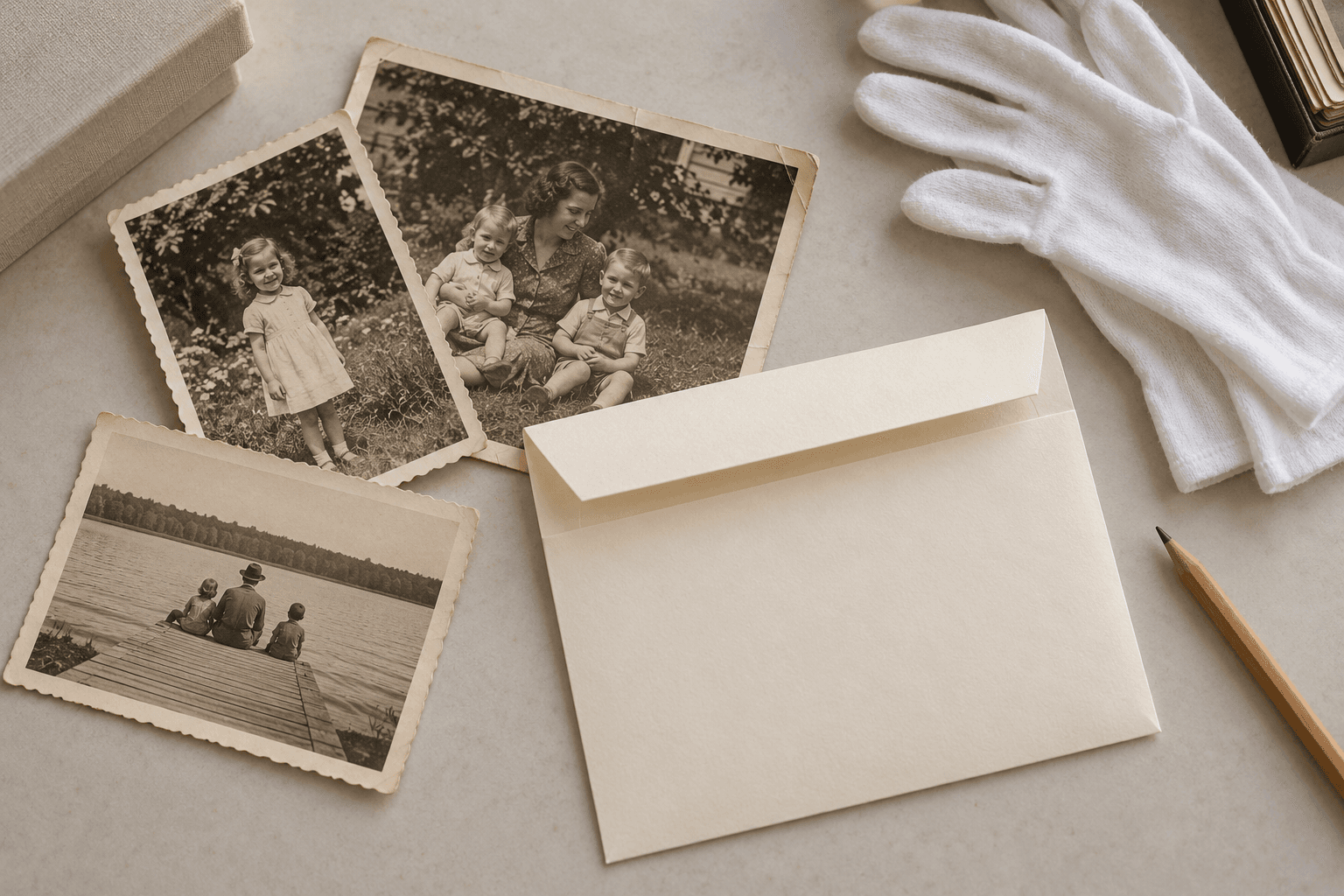
Record objects, gestures, readable words, and spatial arrangement without assigning meanings you cannot support. Keep the full frame and any reverse inscription. Note whether the image might be staged, commemorative, or part of a performance. Avoid using AI-generated symbols or newly legible text as evidence. If the material is culturally sensitive, consider who should be consulted before wider circulation rather than publishing a speculative identification for feedback.
Find context-specific sources
Research the venue or community's own records, dated publications, event programs, and suitable institutional collections. Ask a knowledgeable participant or appropriate community source open questions about what they recognize and how they know. Record the account with agreed access and attribution. A general online description of a tradition can explain possibilities, but it does not authenticate the event in this particular photograph or prove that all visible people shared one role.
Write only supported conclusions
Separate a documented event title, date, venue, and named person from a broader interpretation of clothing or ritual objects. Keep uncertainty and differing explanations in the private research record. Let participants review a proposed public description where appropriate. When restoring the image, preserve ceremonial details and label substantive reconstruction so a cleaner rendering does not accidentally create a symbol or gesture that becomes the basis for a new cultural claim.
Before using this evidence
- Observation precedes cultural interpretation.
- Relevant community or venue sources are consulted.
- Public wording reflects supported facts and access choices.
Sources and further reading
- National Archives: Analyze a photographProvides an observation framework and asks which other evidence could answer questions raised by an image.
- Oral History Association: Best practicesDiscusses preparation, open questions, contextual recording, consent, preservation, and access.
Questions about this restoration task
Can clothing establish the ceremony or a person's religion?
Not reliably by itself. Use the photograph's provenance, appropriate community knowledge, and documentary context, preserving uncertainty and avoiding assumptions about individual beliefs.
Continue with a related guide
Try a restoration on a copy of your photo
Keep the original scan. Upload a separate digital copy, review ImgHeal’s generated result, and decide whether it suits your needs.
Open ImgHeal