How to Collect Independent Family Identifications of a Photo
By ImgHeal · Updated
Independent accounts are easier to evaluate when relatives describe what they recognize before hearing a preferred identification. Show the same source image, ask open questions, and record each account's basis and uncertainty with appropriate consent. Agreement formed after a group discussion is useful family history, but it should not be counted as several independent confirmations of the original photograph.
Explore this topic: Research family photos
Prepare a neutral viewing copy
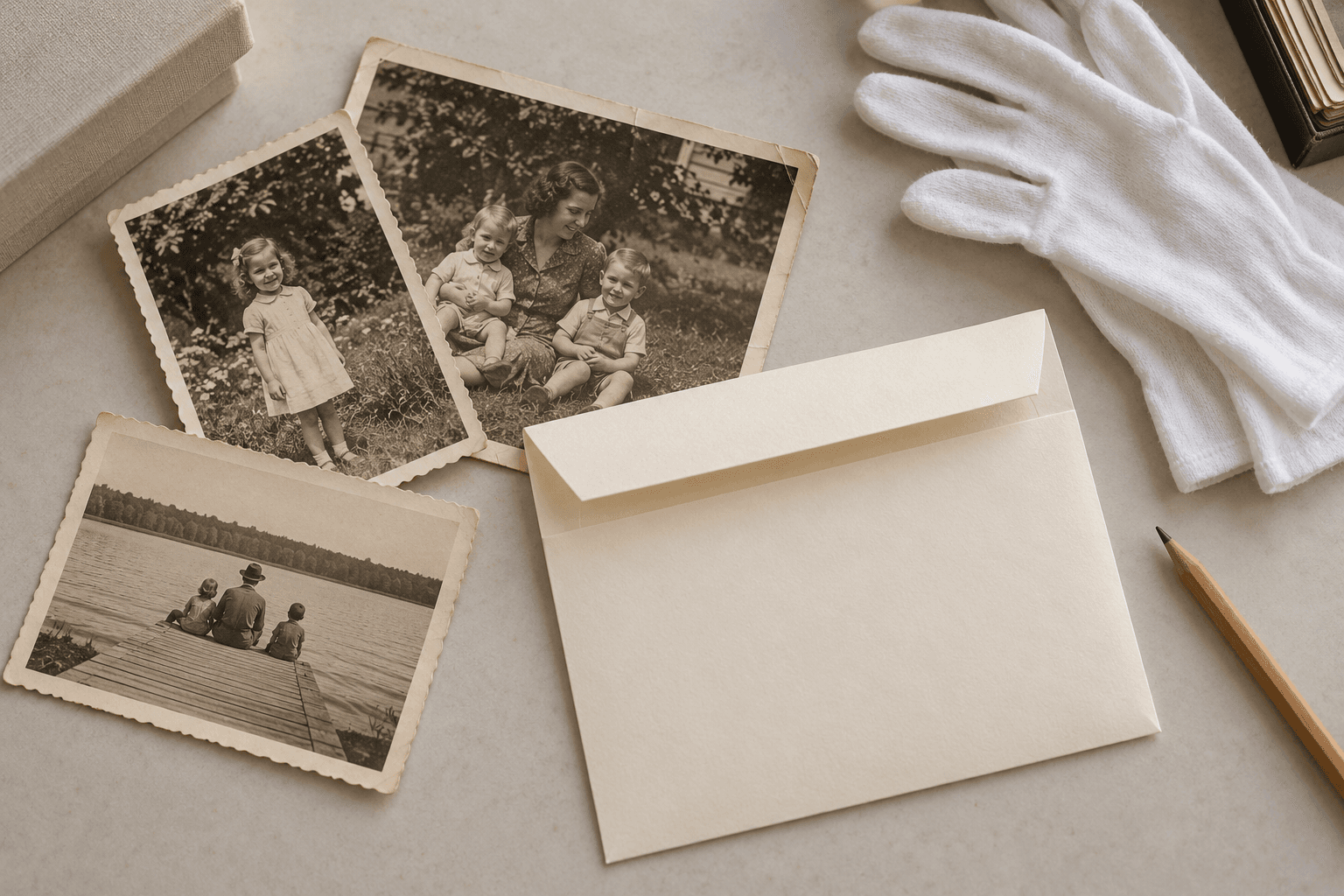
Use the complete source or a restrained readable version with no names embedded in the display. Keep the photograph identifier and explain the purpose of the conversation. Ask permission for notes or recording and agree how the account may be shared. Avoid a colorized or strongly reconstructed portrait when generated features might influence recognition, and keep the original available if a reviewer asks to inspect it.
Ask how recognition happened
Use open questions about people, place, event, and the basis of familiarity. Ask whether the narrator saw the original scene, knew the person later, or learned the name from another caption. Do not introduce another relative's answer before recording their first account. The Oral History Association emphasizes preparation, open questions, contextual recording, and agreed access; apply those principles while allowing the person to decline or qualify an answer.
Combine accounts without flattening differences
Record dates, narrator references, consent choices, and the evidence behind each identification. Mark which accounts were collected before discussion and which emerged afterward. Compare them with documentary and visual evidence, preserving disagreements. A majority view can be a lead, but does not authenticate detail missing from the source. Use a cautious shared caption and retain the individual accounts privately so future research can distinguish independent recollection from a later family consensus.
Before using this evidence
- The first viewing is not labeled with a preferred answer.
- Each account's basis and access choice are recorded.
- Independent recollection is distinct from group discussion.
Sources and further reading
- Oral History Association: Best practicesDiscusses preparation, open questions, contextual recording, consent, preservation, and access.
- National Archives: Analyze a photographProvides an observation framework and asks which other evidence could answer questions raised by an image.
Questions about this restoration task
Should I tell a relative the suspected name first?
If you want an independent initial identification, record their open response before supplying the hypothesis. You can discuss the candidate afterward, keeping the two stages distinct in your notes.
Continue with a related guide
Try a restoration on a copy of your photo
Keep the original scan. Upload a separate digital copy, review ImgHeal’s generated result, and decide whether it suits your needs.
Open ImgHeal