What No Known Restrictions Means on an Archive Photo
By ImgHeal · Updated
An archive's rights statement can be helpful without answering every reuse question. Read its exact scope and supporting notes before treating a downloaded historical photograph as unrestricted in all circumstances.
Explore this topic: Research photo evidence
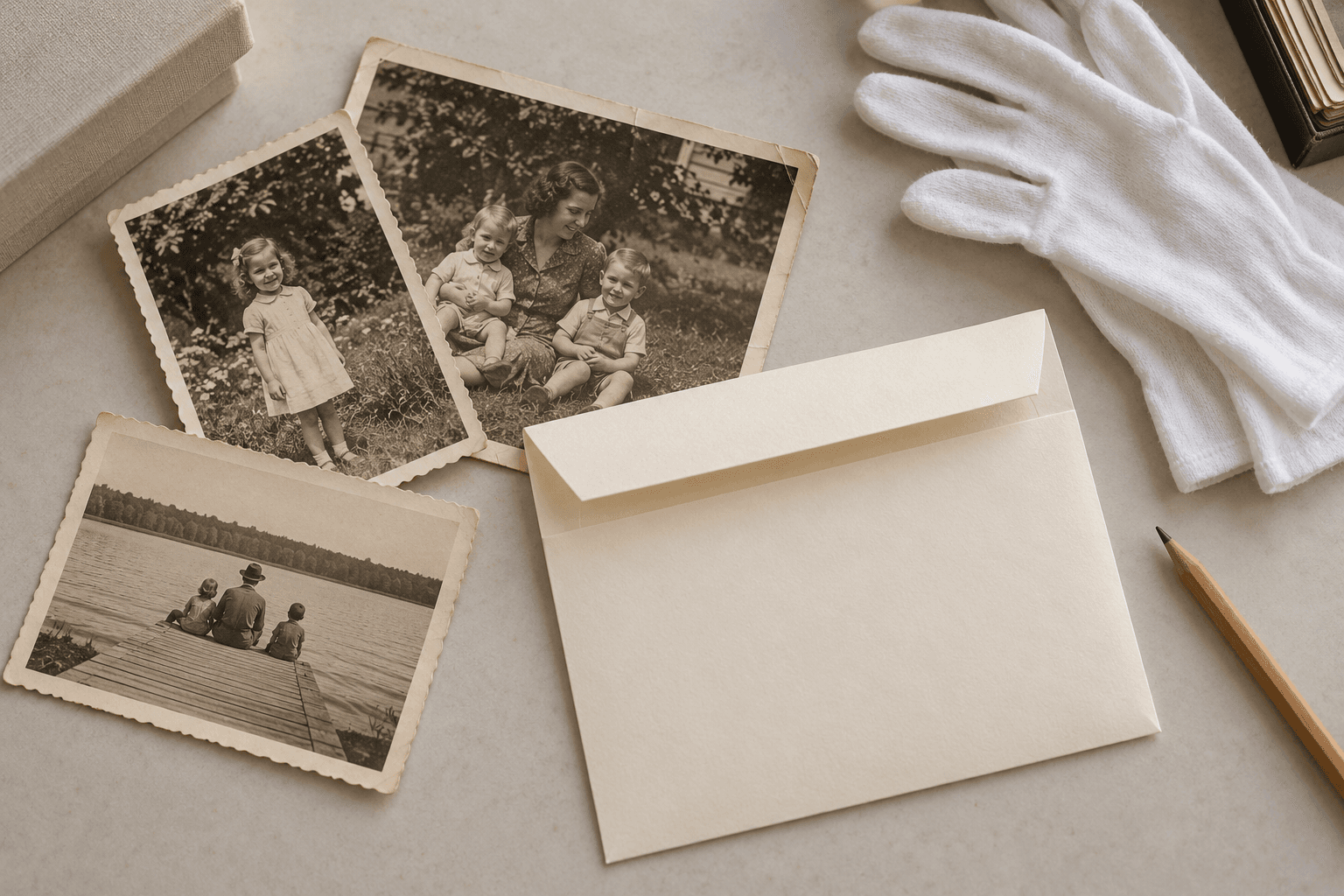
Keep the statement with the specific item
Record the catalogue page, exact statement, institution, and date you consulted it. Check whether the wording applies to one photograph, a whole collection, the underlying work, or a particular digital representation. A search filter or thumbnail label may omit explanatory notes found on the full record. Do not copy a reassuring statement from a neighboring image merely because the two came from the same album. Preserve creator and source information while determining what the institution actually knows about this item.
Read the scope and unresolved considerations
The Library of Congress explains the limits of its rights information and the need for users to assess applicable restrictions. RightsStatements.org also distinguishes statements about underlying works and digital representations. Read any linked explanation rather than assuming no known restrictions is equivalent to a specific open license or a worldwide legal assurance. Consider the intended alteration and audience, and ask the provider for clarification when necessary. A cleaner restoration does not resolve uncertainty that existed in the source's rights record.
Document the basis for the intended reuse
Keep the statement and any clarification alongside the permitted-use notes for the restored derivative. Supply the requested source credit and identify the changes accurately when sharing. If a restriction remains unresolved, do not replace it with a confident public-domain label in your metadata merely to simplify an upload form. Recheck the source record when a substantially different use is proposed. The purpose is a transparent decision record that preserves what was known, what was checked, and what still required clarification.
Example: private viewing versus publication
An image first downloaded for family research is later proposed for a commercial book. Return to the item's statement and the book's intended use instead of assuming the earlier research decision automatically covers a different audience, distribution method, and set of conditions.
Check before sharing this record
- Save the exact item-specific statement and date.
- Read the provider's explanation of its scope.
- Keep unresolved conditions explicit in the reuse record.
Sources and further reading
- Library of Congress: Image rights and restrictionsExplains the limits of collection rights information and the responsibilities of people reusing images.
- RightsStatements.org: Where statements applyDistinguishes rights information for underlying works, digital representations, and other restrictions.
Questions about this restoration task
Is no known restrictions the same as CC0?
No. They are different kinds of information with different purposes. Read the exact statement or public-domain tool and its explanation rather than treating the labels as interchangeable.
Continue with a related guide
Try a restoration on a copy of your photo
Keep the original scan. Upload a separate digital copy, review ImgHeal’s generated result, and decide whether it suits your needs.
Open ImgHeal